
- Home page
- buying guide
- aeronautical test bench
aeronautical test bench
aeronautical test bench: A technical guide
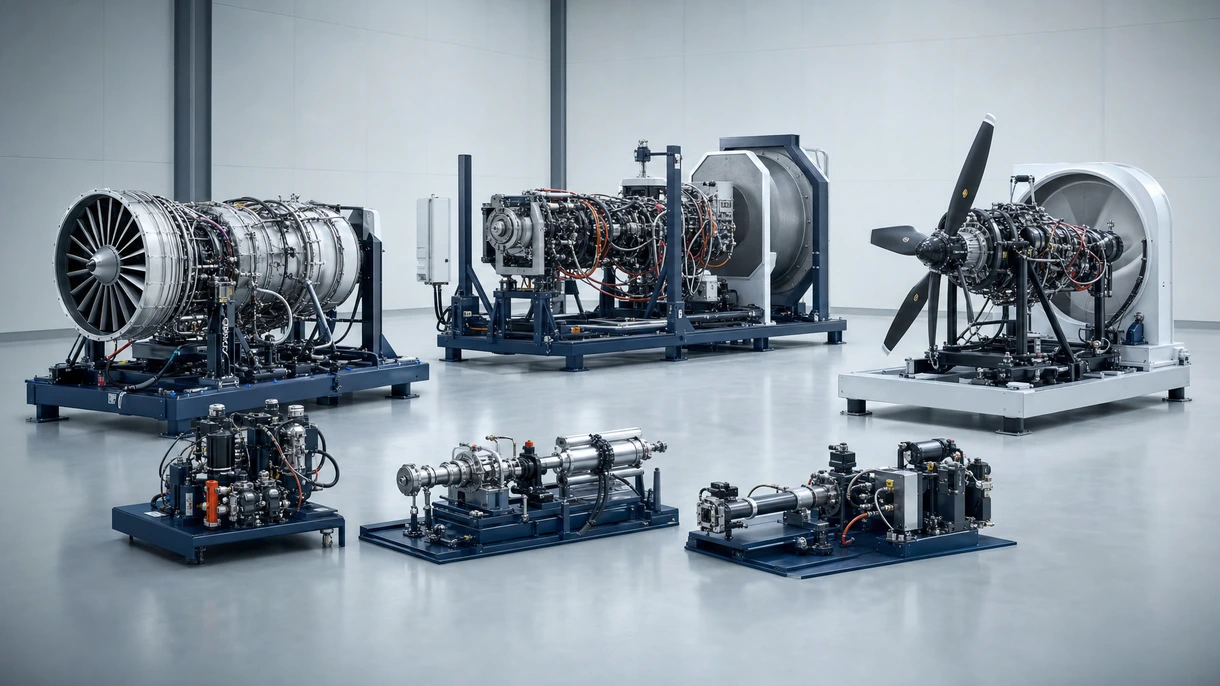
4 Criteria to choose your aeronautical test bench
Multi-protocol bus integration
Facilitates communication between test equipment and diverse avionics architectures like ARINC 429 and MIL-STD-1553 data buses.
Deterministic real-time simulation
Guarantees precise latency control during Hardware-in-the-Loop testing to validate flight control laws and critical system response times.
Certification-ready traceability
Provides rigorous documentation and calibration records meeting DO-160 and AS9100 standards for legally compliant certification of components.
Modular signal conditioning architecture
Allows rapid reconfiguration of input/output channels to accommodate varying sensor types across multiple aircraft platform development cycles.
Available technologies and advantages
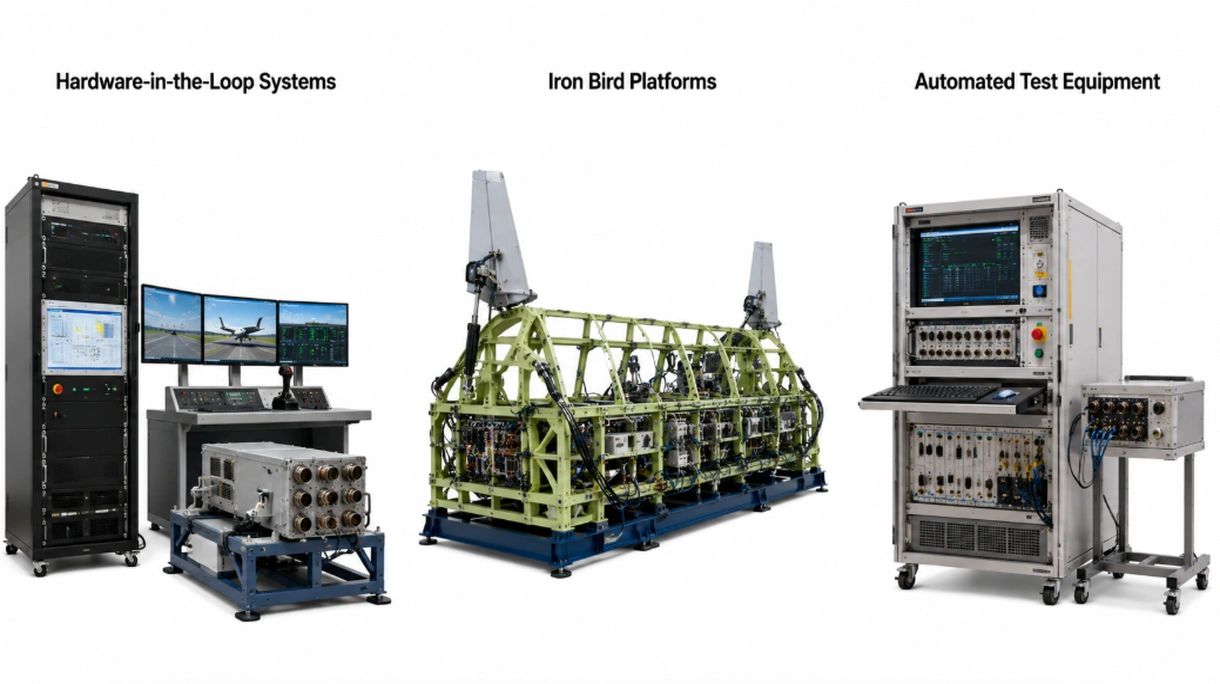
Hardware-in-the-Loop Systems
Hardware-in-the-Loop platforms integrate physical Line Replaceable Units with simulated environments to validate embedded software behavior under dynamic flight conditions safely. Advantages: High accuracy for flight control law verification. Limitations: High initial capital expenditure. Operational trade-offs: Essential for safety-critical systems certification.
Iron Bird Platforms
These full-scale structural benches replicate the entire hydraulic and flight control architecture to test mechanical and electrical interactions during development. Advantages: Realistic system integration testing. Limitations: Immense facility footprint and cost. Operational trade-offs: Necessary for clean-sheet airframe development programs.
Automated Test Equipment
ATE systems focus on production-line validation and MRO diagnostics through standardized, repeatable electrical and functional testing sequences for high-volume components. Advantages: High throughput and reduced human error. Limitations: Limited flexibility for R&D. Operational trade-offs: Best for high-volume component manufacturing.
6 expert tips
Prioritize benches offering native support for both EASA and FAA regulatory documentation to streamline global airworthiness certification processes.
Evaluate the total cost of ownership including long-term calibration services and software maintenance agreements for mission-critical reliability.
Mandate open-architecture software interfaces to prevent vendor lock-in and allow future integration of custom-developed proprietary test scripts.
Require integrated electrical protection systems to safeguard expensive flight-ready Line Replaceable Units during high-power functional testing procedures.
Select suppliers with proven aerospace heritage to ensure components meet rigorous vibration and thermal requirements for hangar environments.
Invest in high-speed data acquisition systems capable of capturing transient faults that standard diagnostic tools frequently overlook.
Always verify the technical certification to ensure compliance with local building safety standards and long-term durability.
Innovations and Trends
Enables real-time comparison between physical bench telemetry and virtual models for predictive failure analysis.
Allows distributed engineering teams to oversee complex testing sequences across different global manufacturing sites.
Optimizes test coverage by identifying redundant sequences and predicting potential hardware malfunctions during runs.
Provide rapid field diagnostics for propulsion and navigation systems to minimize downtime for unmanned fleets.
*Prices are pre-tax. They exclude delivery charges and customs duties and do not include additional charges for installation or activation options. Prices are indicative only and may vary by country, with changes to the cost of raw materials and exchange rates.
About AeroExpo
AeroExpo is a marketplace that offers B2B players a complete experience, from product sourcing to purchase. AeroExpo is an entity of VirtualExpo Group.
Are you a buyer?
Are you a supplier?