
- Home page
- buying guide
- twin-engine aircraft
twin-engine aircraft
twin-engine aircraft: A technical guide

4 Criteria to choose your twin-engine aircraft
Redundant Propulsion Safety
Dual engines ensure ETOPS compliance and safe return-to-base capability during critical engine failure scenarios in transoceanic or remote operations.
Specific Fuel Consumption Rates
Maximizing payload-range efficiency through advanced turbofan bypass ratios significantly reduces operational costs and carbon emissions for fleet operators.
Certified Avionics Integration
Advanced cockpit systems must meet EASA and FAA Part twenty-five standards to ensure interoperability and safety in busy airspace.
Lifecycle Maintenance Costs
Long intervals between overhauls and global spare part availability determine the long-term profitability and readiness of the airframe.
Available technologies and advantages
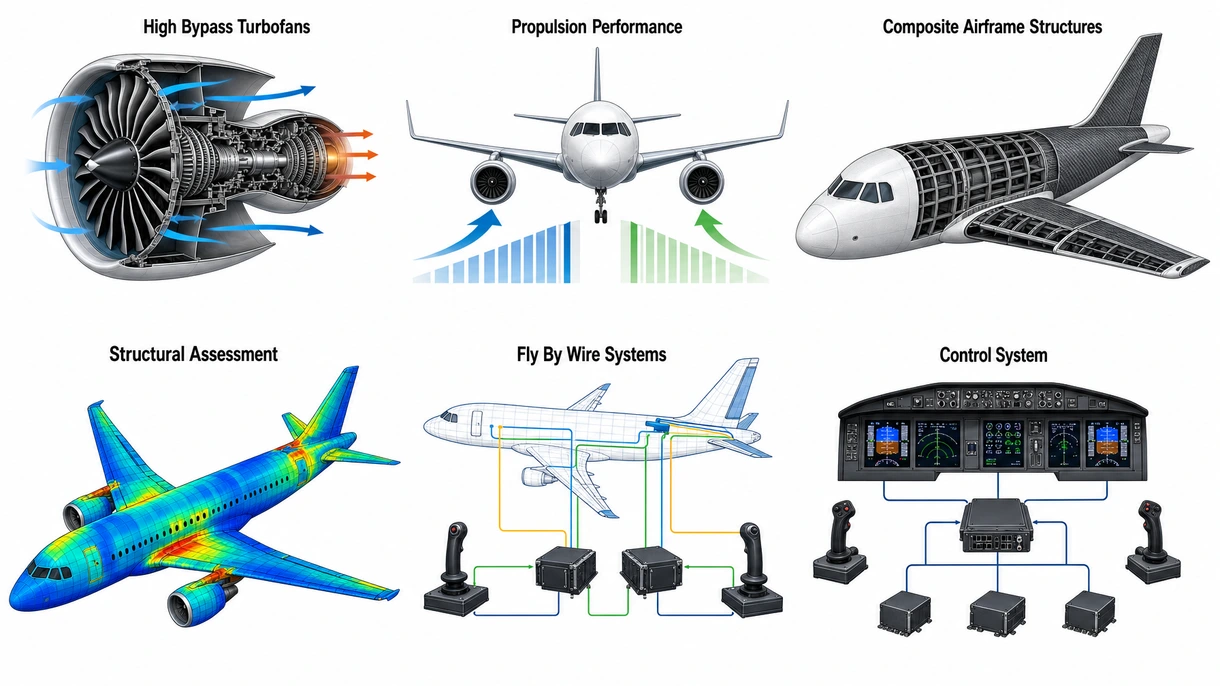
High Bypass Turbofans
These engines dominate commercial aviation by providing superior thrust-to-weight ratios and noise reduction compared to older low-bypass or turbojet configurations.
Propulsion Performance
Advantages include fuel efficiency and range, while limitations involve high acquisition costs and complex maintenance requirements for various hot-section turbine components.
Composite Airframe Structures
Carbon fiber reinforced polymers offer significant weight savings and corrosion resistance over traditional aluminum alloys in modern twin-engine narrow-body and wide-body designs.
Structural Assessment
Benefits include lower fuel burn and fatigue resistance, yet they require specialized repair techniques and have higher initial manufacturing capital costs for operators.
Fly By Wire Systems
Electronic flight control interfaces replace heavy mechanical linkages with actuators, enhancing pilot precision and safety through integrated digital flight envelope protection protocols.
Control System Dynamics
Systems improve handling and weight, but introduce reliance on complex software architectures and require highly redundant electrical power sources for safe operation.
6 expert tips
Prioritize airframes with high ETOPS ratings to maximize routing flexibility and reduce fuel consumption on transoceanic flight paths.
Ensure all engine performance monitoring systems are compatible with existing fleet telemetry for streamlined predictive maintenance and safety.
Evaluate the residual value of the airframe by analyzing historical secondary market demand for specific twin-engine configurations and models.
Negotiate long term power by the hour agreements to stabilize maintenance budgets and guarantee engine availability across global operations.
Confirm that cockpit ergonomics and avionics suites align with current pilot training programs to minimize transition times and costs.
Always verify the technical certification to ensure compliance with local building safety standards and long-term durability.
Innovations and Trends
Testing confirms dual-engine compatibility with sustainable biofuel blends to meet upcoming international carbon reduction mandates effectively.
Real-time simulation models of engine wear allow operators to schedule maintenance precisely, reducing unscheduled groundings and operational costs.
Distributed electric fans paired with turbogenerators aim to reduce local emissions during takeoff and landing phases for cleaner operations.
Certified three dimensional printed engine parts reduce weight and complexity while maintaining structural integrity under extreme thermal stress conditions.
*Prices are pre-tax. They exclude delivery charges and customs duties and do not include additional charges for installation or activation options. Prices are indicative only and may vary by country, with changes to the cost of raw materials and exchange rates.
About AeroExpo
AeroExpo is a marketplace that offers B2B players a complete experience, from product sourcing to purchase. AeroExpo is an entity of VirtualExpo Group.
Are you a buyer?
Are you a supplier?