
- Home page
- buying guide
- single-engine aircraft
single-engine aircraft
single-engine aircraft: A technical guide

4 Criteria to choose your single-engine aircraft
Type Certified Mission Capability
European or American aviation certification ensures airframe structural integrity for specific commercial or private utility operations.
Useful Load To Range
Payload capacity must accommodate mission specific fuel reserves and equipment weights without exceeding maximum takeoff weight structural limits.
Direct Operating Cost Efficiency
Fuel consumption per hour and scheduled maintenance intervals directly dictate the long term financial viability for flight training fleets.
Avionics Integration and Redundancy
Modern glass cockpits provide critical situational awareness while redundant systems mitigate electronic failures during instrument meteorological conditions flight.
Available technologies and advantages
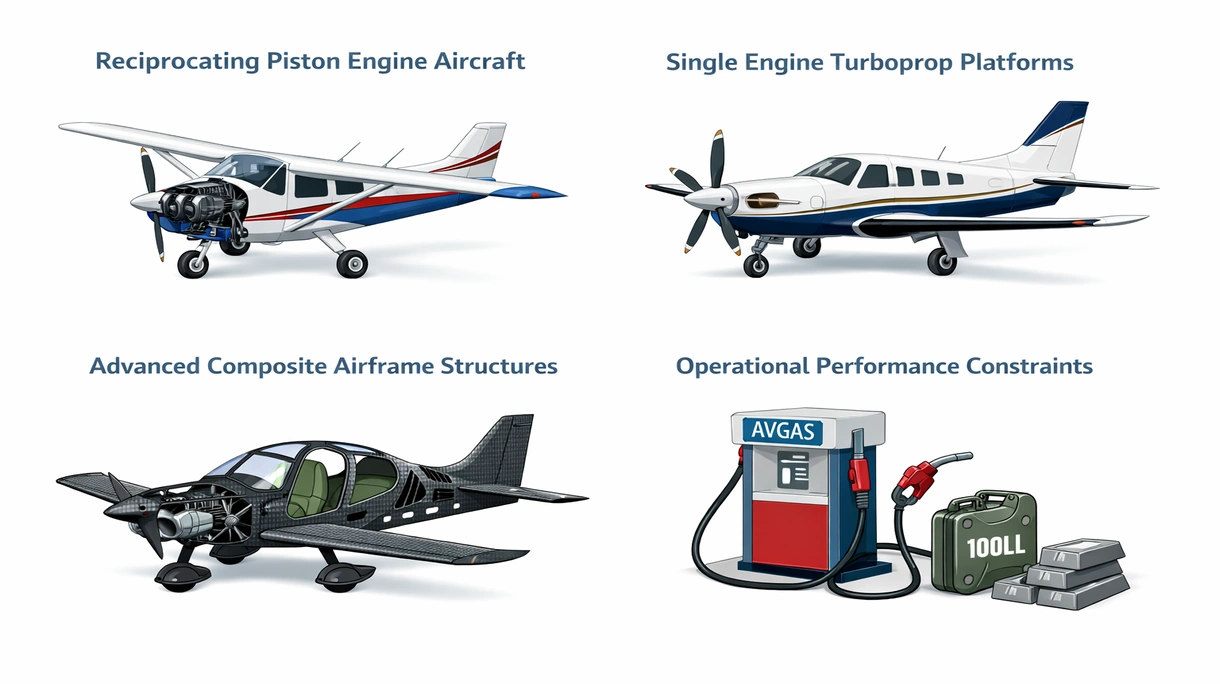
Reciprocating Piston Engine Aircraft
Air-cooled reciprocating engines provide a reliable power-to-weight ratio for training aircraft while utilizing widespread aviation gasoline distribution networks across global flight training facilities.
Operational Performance Constraints
These platforms offer low acquisition costs and mechanical simplicity yet face leaded fuel dependency and lower thermal efficiency compared to turbine alternatives.
Single Engine Turboprop Platforms
Turbine engines offer superior reliability and high-altitude performance by converting thermal energy into shaft horsepower for high-speed cruise and heavy lift capabilities.
Strategic Financial Tradeoffs
These units deliver exceptional power density and safety but require substantial capital expenditure and specialized maintenance facilities for mandatory hot section component inspections.
Advanced Composite Airframe Structures
Carbon fiber and epoxy resin layups allow for aerodynamic optimization and high strength-to-weight ratios compared to traditional riveted aluminum or steel tube designs.
Structural Maintenance Tradeoffs
Composite airframes minimize drag and prevent corrosion yet involve complex repair procedures and higher sensitivity to localized impact damage during ground handling.
6 expert tips
Prioritize airframes with high resale liquidity and established global service centers to maximize residual asset value over time.
Evaluate specialized insurance premiums based on airframe safety records and pilot training requirements before finalizing any capital acquisition.
Select powerplants compatible with emerging sustainable aviation fuels to mitigate future regulatory risks regarding leaded gasoline phase-out.
Conduct thorough pre-purchase inspections focused on airworthiness directives and structural corrosion history to avoid unforeseen maintenance grounding.
Optimize cabin configuration for multi-mission flexibility to increase the utilization rate across various commercial transport and training scenarios.
Implement digital maintenance tracking systems to ensure precise traceability and compliance with continuous airworthiness management organization requirements.
Always verify the technical certification to ensure compliance with local building safety standards and long-term durability.
Innovations and Trends
Aim to reduce noise footprints and eliminate carbon emissions for short range urban air mobility flight profiles.
Enhance flight envelope protection and reduce pilot workload through advanced electronic stability and command augmentation.
Provides real time engine telemetry data to predict component failures and optimize preventive maintenance scheduling.
Allows for rapid production of lightweight engine components while maintaining strict aerospace grade metallurgical properties.
*Prices are pre-tax. They exclude delivery charges and customs duties and do not include additional charges for installation or activation options. Prices are indicative only and may vary by country, with changes to the cost of raw materials and exchange rates.
About AeroExpo
AeroExpo is a marketplace that offers B2B players a complete experience, from product sourcing to purchase. AeroExpo is an entity of VirtualExpo Group.
Are you a buyer?
Are you a supplier?