
- Home page
- buying guide
- blade antenna
blade antenna
blade antenna: A technical guide
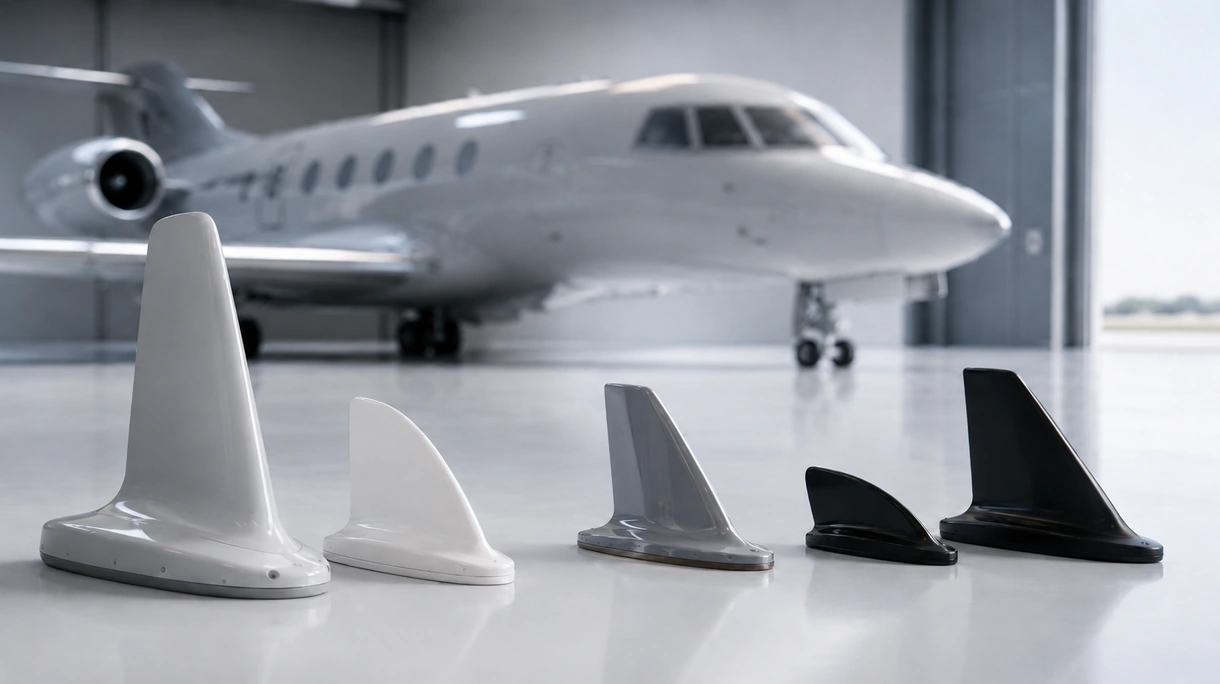
4 Criteria to choose your blade antenna
Aerodynamic Drag Coefficient
Low profile design minimizes fuel consumption and structural stress during high-speed flight maneuvers in subsonic or supersonic regimes.
TSO Performance Standards
Compliance with FAA and EASA Technical Standard Orders ensures signal integrity and electromagnetic compatibility across diverse frequency bands.
Environmental Structural Durability
Resistance to lightning strikes, high-altitude icing, and extreme vibration is mandatory for maintaining consistent communication and navigation links.
Frequency Band Coverage
Precise impedance matching across VHF, UHF, or L-band ranges determines the efficiency of transponders and satellite communication systems.
Available technologies and advantages
VHF Communication Blades
These antennas operate in the 118-137 MHz range using vertically polarized radiation patterns for clear voice and data transmission. Advantages include high reliability and simple installation. Limitations involve larger physical size and higher drag. Operational trade-offs favor standard commercial airframes.
Multi-Function L-Band Units
Integrating DME, TCAS, and transponder functions into a single housing reduces the airframe footprint and overall drag levels significantly. Advantages include weight savings and lower drag. Limitations involve complex multiplexing and cost. Operational trade-offs favor modern integrated avionics.
Conformal Blade Designs
These follow the aircraft curvature to optimize aerodynamics and reduce the radar cross-section for low-observable or high-performance platforms. Advantages include superior drag reduction and stealth. Limitations include high engineering costs. Operational trade-offs favor supersonic or specialized unmanned systems.
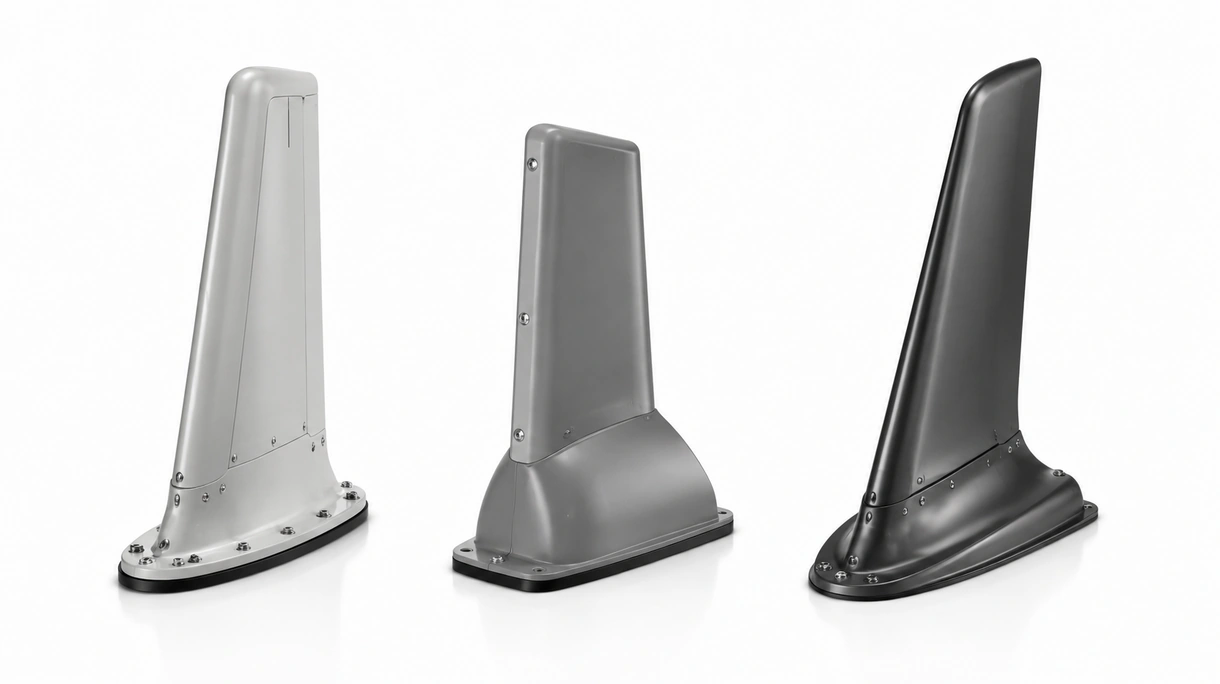
6 expert tips
Prioritize antennas with dual FAA TSO and EASA ETSO certifications to simplify cross-border airworthiness transitions and maintenance audits.
Verify the lightning protection rating to ensure the airframe remains safe during severe weather events and atmospheric discharges.
Select composite-reinforced housings that withstand bird strikes and extreme vibration levels found in high-performance jet engine environments.
Analyze the mean time between failures data to calculate long term lifecycle costs and reduce unscheduled maintenance events.
Ensure the mounting footprint is compatible with existing airframe reinforcements to avoid expensive structural modifications during retrofitting phases.
Confirm the impedance matching performance across the entire temperature range to prevent signal degradation in sub-zero high-altitude conditions.
Always verify the technical certification to ensure compliance with local building safety standards and long-term durability.
Innovations and Trends
Electronically steered arrays integrated into blade structures allow for dynamic beamforming without moving parts, increasing satellite link reliability.
Additive manufacturing of internal radiator elements enables complex geometries that optimize gain while reducing the total antenna weight.
Carbon nanotube reinforced shells provide superior electromagnetic shielding and impact resistance compared to traditional fiberglass or epoxy housings.
Wideband frequency agility allows a single antenna to support multiple legacy and next-generation protocols, simplifying global fleet configurations.
*Prices are pre-tax. They exclude delivery charges and customs duties and do not include additional charges for installation or activation options. Prices are indicative only and may vary by country, with changes to the cost of raw materials and exchange rates.
About AeroExpo
AeroExpo is a marketplace that offers B2B players a complete experience, from product sourcing to purchase. AeroExpo is an entity of VirtualExpo Group.
Are you a buyer?
Are you a supplier?