
- Home page
- buying guide
- business aircraft
business aircraft
business aircraft: A technical guide

4 Criteria to choose your business aircraft
Range and Payload Capability
Evaluates non-stop transatlantic or transcontinental mission feasibility while maintaining required fuel reserves and maximum passenger occupancy limits.
Lifecycle Maintenance Cost Efficiency
Focuses on hourly operating expenses, scheduled inspection intervals, and component availability through global OEM service network support.
Cabin Environment Pressurization Performance
Determines passenger fatigue levels by maintaining low cabin altitudes during high-elevation cruise segments for enhanced executive productivity.
Avionics System Integration Level
Assesses NextGen and SESAR compliance to ensure seamless airspace access and reduced pilot workload through advanced automation.
Available technologies and advantages
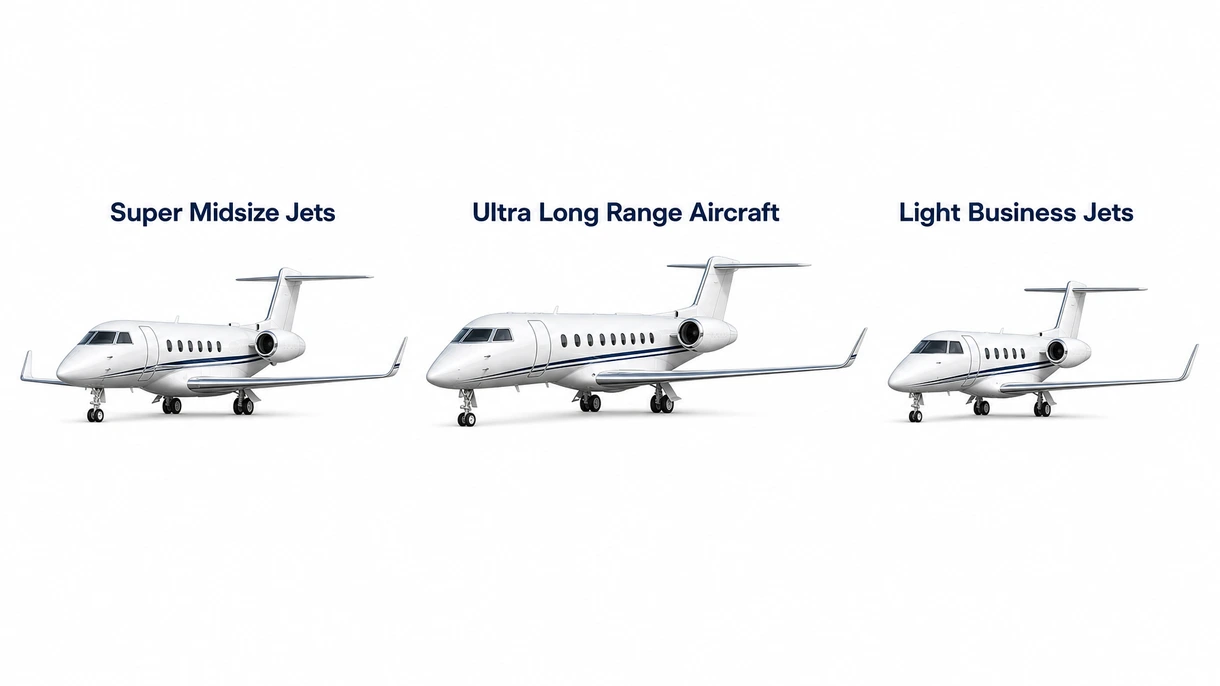
Super Midsize Jets
Large cabin volume and intercontinental range define this category, bridging the gap between light efficiency and heavy capability. Operational trade-offs involve higher fuel burn per hour compared to light jets while offering superior speed and comfort.
Ultra Long Range Aircraft
These platforms prioritize endurance and maximum takeoff weight to facilitate thirteen-hour flights across global financial hubs without stopping. High acquisition costs and landing fee premiums represent significant financial limitations despite unmatched global operational flexibility.
Light Business Jets
Optimized for short-haul regional missions, these airframes provide excellent runway performance and lower direct operating costs for small teams. The primary limitation is restricted cabin space and limited baggage capacity for extended multi-day international deployments.
6 expert tips
Prioritize airframes with high residual value and documented maintenance history to ensure maximum capital preservation during future divestment.
Evaluate the specific engine program coverage to mitigate unpredictable financial exposure during major scheduled hot section inspection events.
Select aircraft models featuring flight decks compatible with upcoming data link mandates to avoid expensive future retrofit grounding.
Audit the existing manufacturer support infrastructure within your primary geographical operational theater to minimize grounded aircraft response times.
Analyze real-world fuel burn rates across specific mission profiles to validate manufacturer performance claims against actual operational data.
Conduct thorough pre-buy inspections through independent certified facilities to identify hidden structural corrosion or undocumented component life limits. Always verify the technical certification to ensure compliance with local building safety standards and long-term durability.
Innovations and Trends
Adoption of drop-in biofuels reduces lifecycle carbon emissions by eighty percent, meeting strict international environmental regulatory requirements.
Digital flight control systems optimize aerodynamic efficiency and flight envelope protection, significantly improving safety margins during high-altitude operations.
New Ka-band and Ku-band systems enable gigabit-speed data transfers, transforming the cabin into a fully functional airborne office.
Extensive use of carbon fiber reinforced polymers reduces total weight, increasing fuel efficiency and allowing for larger windows.
*Prices are pre-tax. They exclude delivery charges and customs duties and do not include additional charges for installation or activation options. Prices are indicative only and may vary by country, with changes to the cost of raw materials and exchange rates.
About AeroExpo
AeroExpo is a marketplace that offers B2B players a complete experience, from product sourcing to purchase. AeroExpo is an entity of VirtualExpo Group.
Are you a buyer?
Are you a supplier?