
- Home page
- buying guide
- 4-stroke piston engine
4-stroke piston engine
4-stroke piston engine: A technical guide
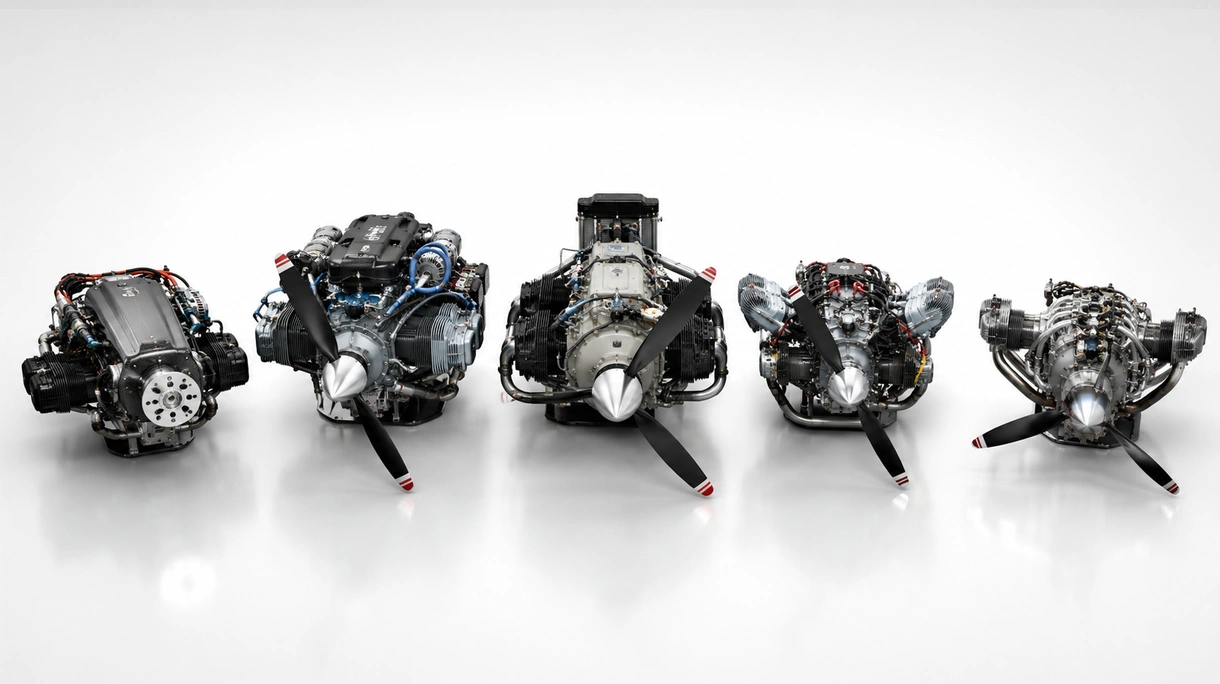
4 Criteria to choose your 4-stroke piston engine
Power-to-weight ratio efficiency
Crucial for payload and range optimization in general aviation and tactical UAS platforms requiring high energy density.
TBO and maintenance intervals
Extended time between overhauls directly reduces lifecycle costs while ensuring continuous airworthiness under EASA or FAA Part 33.
Electronic fuel injection reliability
Digital management optimizes fuel consumption and prevents carburetor icing, ensuring stable operation across varying flight altitudes and temperatures.
Certified fuel versatility
Compatibility with UL94 or 100LL ensures global mission readiness despite the ongoing transition from leaded aviation gasoline fuels.
Available technologies and advantages
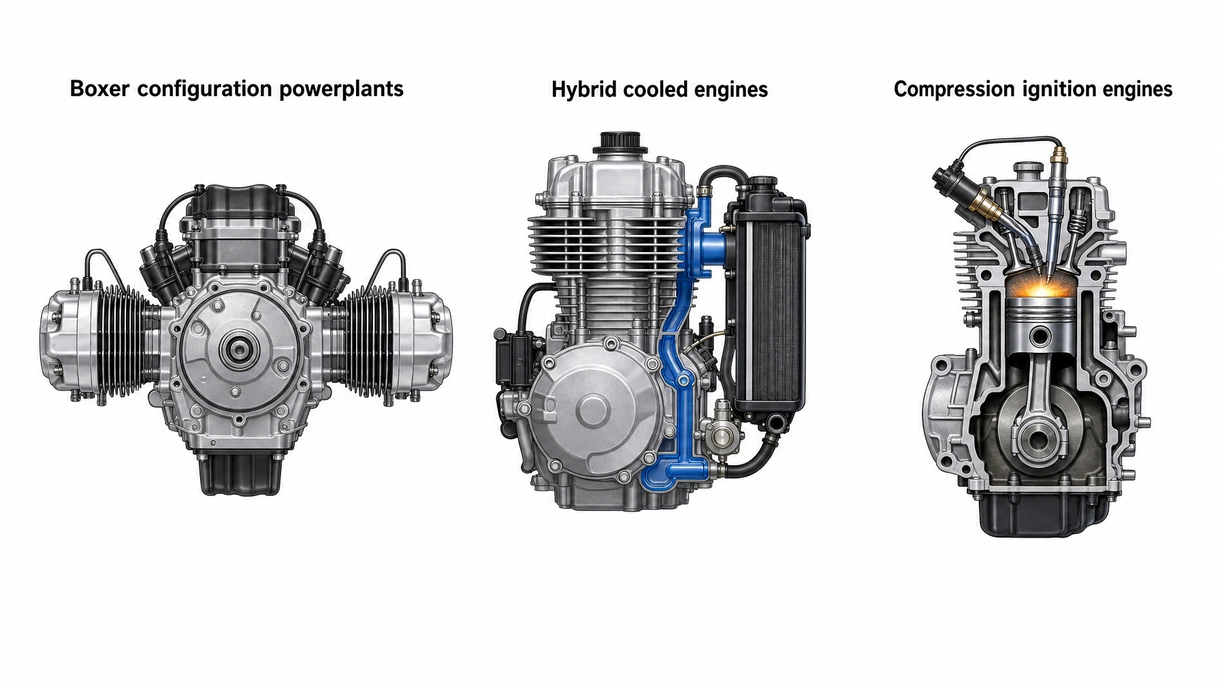
Boxer configuration powerplants
utilize horizontally opposed cylinders to reduce vibration and frontal area, essential for minimizing drag in FAA certified light aircraft designs. Advantages include superior mechanical balance and simplified air cooling. Limitations involve high reliance on ambient airflow. Trade-offs involve prioritizing aerodynamic profile over cooling simplicity.
Hybrid cooled engines
integrate liquid-cooled heads with air-cooled cylinders to provide superior thermal stability during high-power climbs and prolonged high-altitude drone missions. Advantages include precise temperature control and reduced thermal shock. Limitations involve added weight from radiators. Trade-offs balance increased complexity against improved engine longevity.
Compression ignition engines
optimized for kerosene-based fuels offer exceptional thermal efficiency and logistical commonality for military operators using standardized Jet-A1 fuel supplies. Advantages include significantly lower fuel consumption and safety. Limitations involve higher initial engine mass. Trade-offs center on extended range versus reduced climb performance.
6 expert tips
Prioritize engines with integrated FADEC systems to reduce pilot workload and optimize fuel consumption across all flight phases.
Verify complete traceability of every internal component to ensure compliance with AS9100 standards and localized FAA airworthiness requirements.
Select powerplants offering modular replacement parts to minimize grounded time during unscheduled maintenance events in commercial flight schools.
Evaluate the manufacturer support network density to guarantee rapid spare parts delivery and certified technical assistance across continents.
Assess the total cost of ownership by including overhaul expenses rather than focusing solely on the initial acquisition price.
Always verify the technical certification to ensure compliance with local building safety standards and long-term durability.
Innovations and Trends
Improves fuel efficiency by fifteen percent through precise electronic mixture and ignition timing management.
For cylinder heads reduces weight by ten percent while significantly enhancing heat dissipation in high-stress environments.
Allows seamless operation on sustainable aviation fuels to meet evolving international carbon reduction regulatory mandates.
Enable predictive maintenance by tracking real-time vibration and thermal data for enhanced flight safety.
*Prices are pre-tax. They exclude delivery charges and customs duties and do not include additional charges for installation or activation options. Prices are indicative only and may vary by country, with changes to the cost of raw materials and exchange rates.
About AeroExpo
AeroExpo is a marketplace that offers B2B players a complete experience, from product sourcing to purchase. AeroExpo is an entity of VirtualExpo Group.
Are you a buyer?
Are you a supplier?