
- Home page
- buying guide
- paratrike
paratrike
paratrike: A technical guide
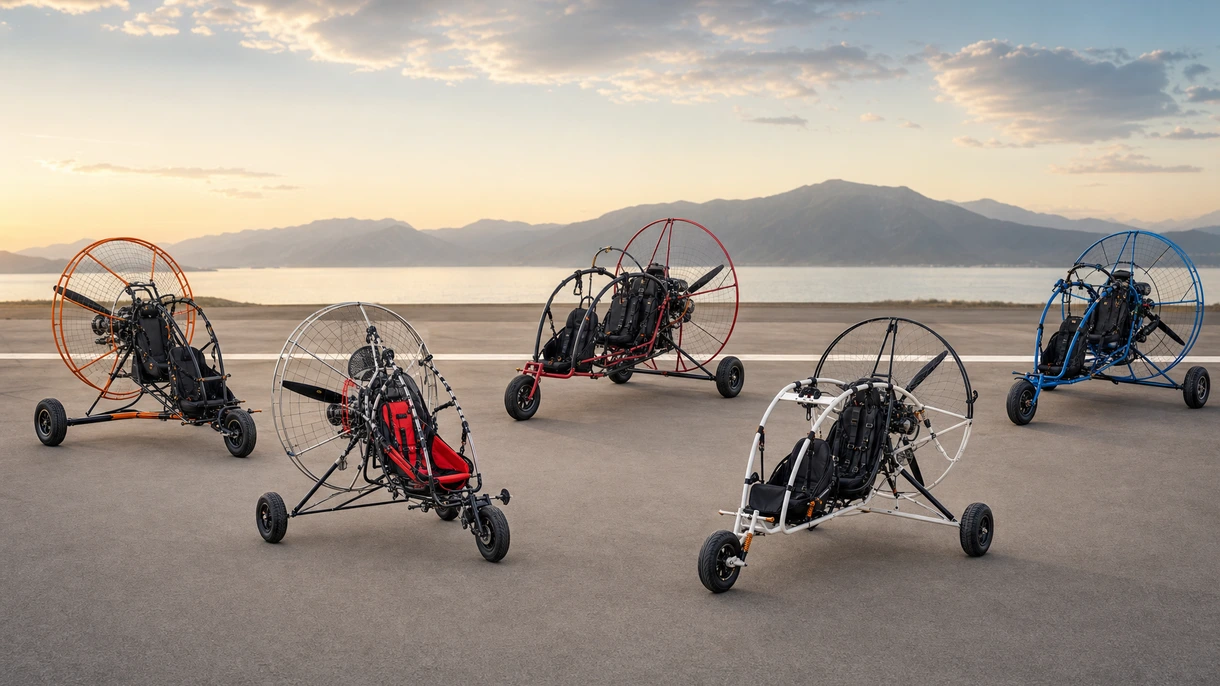
4 Criteria to choose your paratrike
Airframe Structural Integrity
Aerospace-grade T6 aluminum or chromoly steel ensures load-bearing reliability under high G-load maneuvers and rough terrain landings.
Powertrain Reliability Ratio
Dual-ignition engines or high-torque electric motors must maintain consistent power-to-weight ratios for safe short-field takeoff performance.
Aeronautical Certification Compliance
Validation against FAA Part 103 or EASA UL standards guarantees adherence to strict safety and manufacturing traceability requirements.
Suspension Damping Efficiency
Advanced pneumatic or leaf-spring systems absorb kinetic energy during heavy-load descents to protect the pilot and airframe components.
Available technologies and advantages
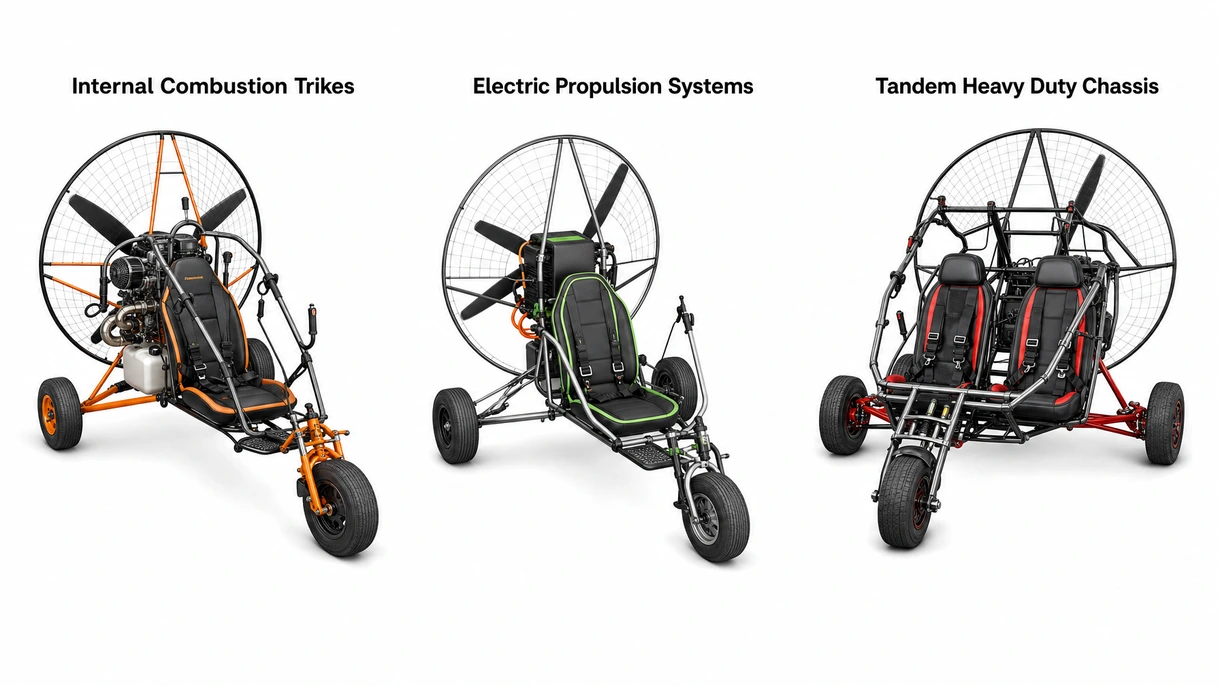
Internal Combustion Trikes
Two-stroke or four-stroke engines offer high energy density for extended range missions compared to current battery-limited electric alternatives in utility roles. These units provide high endurance but require intensive maintenance schedules. They produce significant noise, necessitating operational trade-offs in restricted urban zones.
Electric Propulsion Systems
Brushless motors powered by high-capacity lithium cells deliver instant torque and zero emissions, though flight duration remains restricted versus liquid fuels. Lower noise profiles enhance stealth for surveillance, but high battery weight reduces payload capacity. They offer superior reliability with simplified mechanical maintenance requirements.
Tandem Heavy Duty Chassis
Reinforced frames designed for dual-occupancy or heavy cargo transport utilize oversized wheels and heavy-duty paraglider attachment points for stability. These offer high utility for training or logistics but sacrifice overall agility. They require significantly larger wing surface areas to maintain safe lift coefficients.
6 expert tips
Prioritize airframes constructed from aeronautical-grade alloys to ensure structural fatigue resistance during repetitive high-stress takeoff and landing cycles.
Verify the availability of standardized aerospace spare parts to minimize downtime and maintain rigorous fleet maintenance schedules effectively.
Select powerplants with documented Mean Time Between Failures to optimize long-term operational costs and pilot safety during missions.
Evaluate the paraglider wing compatibility based on projected maximum takeoff weight to ensure aerodynamic stability and stall margin.
Invest in digital avionics suites providing real-time telemetry and engine monitoring to prevent catastrophic mid-flight mechanical system failures.
Assess the modularity of the chassis for rapid field assembly and disassembly to facilitate efficient logistics and transport.
Always verify the technical certification to ensure compliance with local building safety standards and long-term durability.
Innovations and Trends
Hybrid power systems significantly extend flight endurance while maintaining zero-emission profiles for environmentally sensitive aerospace surveillance missions.
Carbon fiber and Kevlar integration reduces overall empty weight, allowing for increased payload or higher fuel capacity.
Integration of GPS-guided stabilization systems enables semi-autonomous patrol patterns, reducing pilot fatigue during long-duration aerial monitoring.
Advanced rapid-deploy recovery systems provide a critical safety layer by lowering the entire aircraft during catastrophic failure.
*Prices are pre-tax. They exclude delivery charges and customs duties and do not include additional charges for installation or activation options. Prices are indicative only and may vary by country, with changes to the cost of raw materials and exchange rates.
About AeroExpo
AeroExpo is a marketplace that offers B2B players a complete experience, from product sourcing to purchase. AeroExpo is an entity of VirtualExpo Group.
Are you a buyer?
Are you a supplier?