
- Home page
- buying guide
- de-icing vehicle
de-icing vehicle
de-icing vehicle: A technical guide
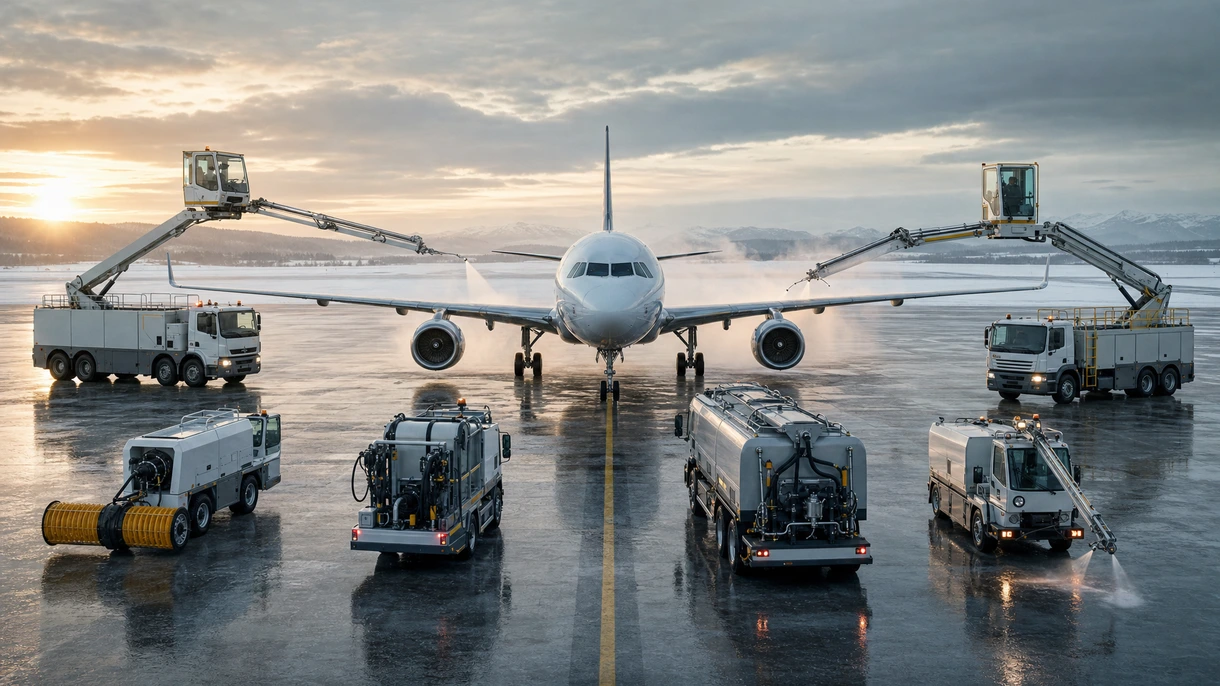
4 Criteria to choose your de-icing vehicle
Fluid recovery efficiency rate
High-efficiency recovery systems minimize expensive de-icing fluid waste while meeting strict environmental discharge regulations at international airport hubs.
Boom reach and stability
Extended reach telescopic booms ensure safe de-icing of A380 or 747-8 tail sections under severe winter wind conditions.
Nozzle flow precision control
Proportional mixing systems adjust fluid concentration in real-time, optimizing protection against frost while significantly lowering operational chemical expenses.
Telemetry and data integration
Real-time data transmission ensures precise fluid usage tracking for billing accuracy and mandatory safety reporting to civil aviation authorities.
Available technologies and advantages
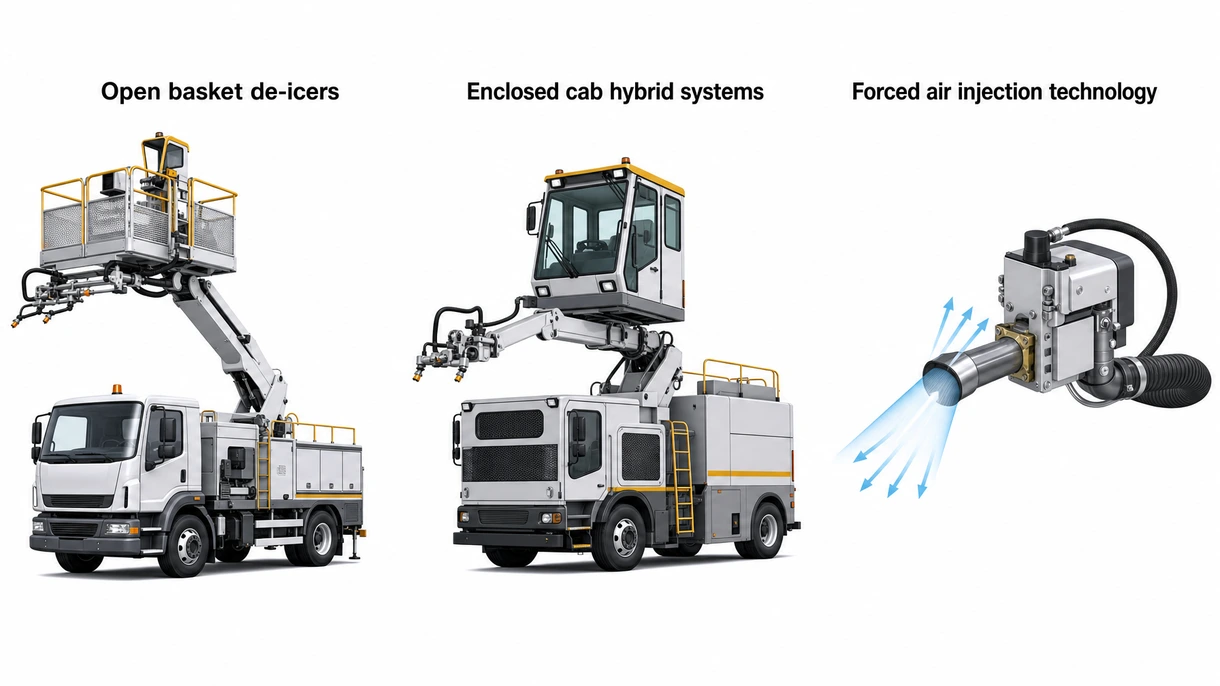
Open basket de-icers
utilize traditional manual nozzle control for regional aircraft, providing a cost-effective solution where high-frequency operations or extreme elevations are unnecessary. Advantages include low initial capital expenditure and simplified hydraulic maintenance. Limitations involve increased operator exposure to harsh weather. The trade-off prioritizes budget over high-volume efficiency.
Enclosed cab hybrid systems
integrate climate-controlled operator cabins with electric-hydraulic booms, enhancing safety during extended shifts while reducing carbon emissions in green airport zones. Advantages center on superior operator ergonomics and year-round utilization in extreme climates. Limitations include higher complex component costs. The trade-off emphasizes safety and sustainability over short-term ROI.
Forced air injection technology
combines high-velocity air with minimal fluid spray to remove dry snow, drastically reducing glycol consumption during light precipitation events. Advantages include significant reduction in hazardous fluid waste and disposal costs. Limitations involve higher noise levels and specialized training needs. The trade-off balances fluid savings against equipment complexity.
6 expert tips
adoption reduces long-term labor costs and improves coordination during critical turnaround windows for ground crews.
maintain de-icing effectiveness while reducing expensive chemical waste significantly through precise fluid concentration control.
must be evaluated to ensure rapid fluid readiness during sudden and extreme temperature drops.
prevent accidental airframe contact and expensive structural damage repairs during night operations or low visibility.
simplifies maintenance across diverse global ground support equipment fleets and reduces inventory holding costs.
to ensure compliance with local building safety standards and long-term durability.
Innovations and Trends
Utilizes LiDAR sensors to automate boom positioning, increasing safety and reducing human error during night operations.
Allows operators to remotely monitor glycol concentrations, ensuring EASA/FAA compliance through precise digital documentation logs.
Replaces diesel engines with high-capacity batteries, meeting zero-emission targets for modern sustainable airport infrastructure development.
Supplement traditional fluids to melt ice faster, decreasing the environmental footprint of heavy winter operations.
*Prices are pre-tax. They exclude delivery charges and customs duties and do not include additional charges for installation or activation options. Prices are indicative only and may vary by country, with changes to the cost of raw materials and exchange rates.
About AeroExpo
AeroExpo is a marketplace that offers B2B players a complete experience, from product sourcing to purchase. AeroExpo is an entity of VirtualExpo Group.
Are you a buyer?
Are you a supplier?