
- Home page
- buying guide
- aircraft dock
aircraft dock
aircraft dock: A technical guide
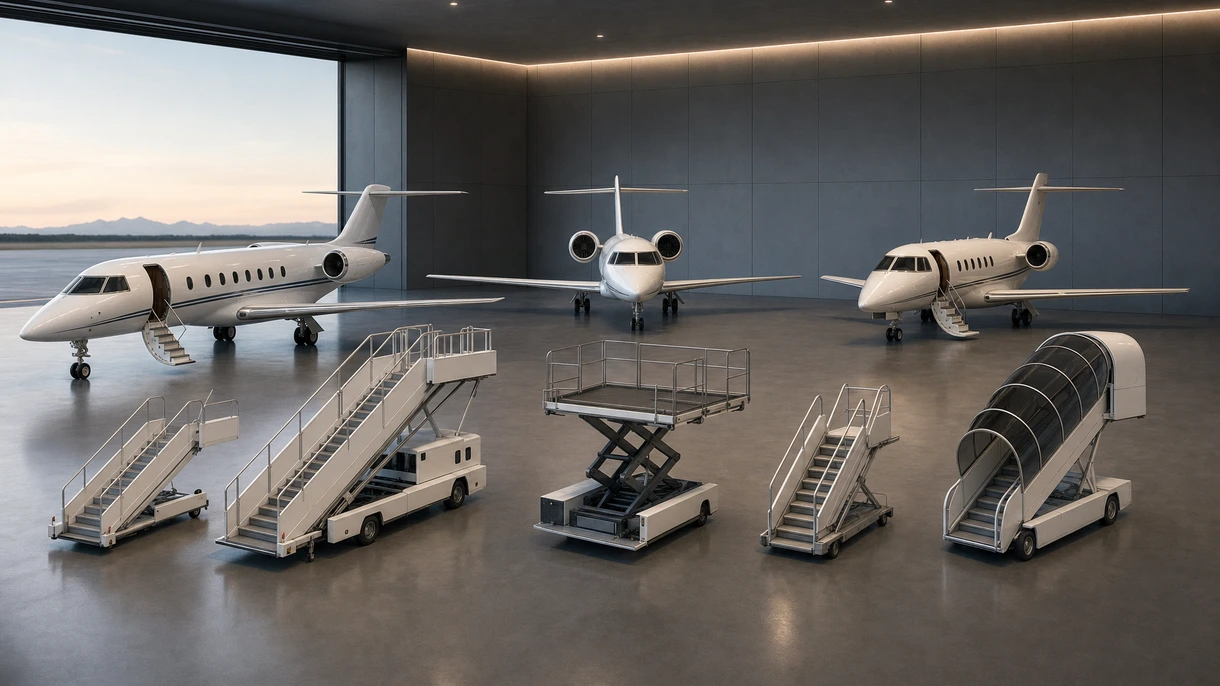
4 Criteria to choose your aircraft dock
Multi-model airframe compatibility
Precision engineering ensures contour-matching across diverse fleets, reducing collision risks during complex heavy maintenance checks and hangar operations.
Height adjustment precision
Synchronized mechanical or hydraulic lift mechanisms allow technicians safe, ergonomic access to empennage, wings, and fuselage interface points.
Safety standard compliance
Adherence to global fall protection regulations minimizes liability while maximizing technician productivity during long-duration airframe maintenance overhauls.
Rapid deployment design
Lightweight aluminum modules facilitate quick reconfiguration between different aircraft types, optimizing hangar floor utilization and reducing critical downtime.
Available technologies and advantages
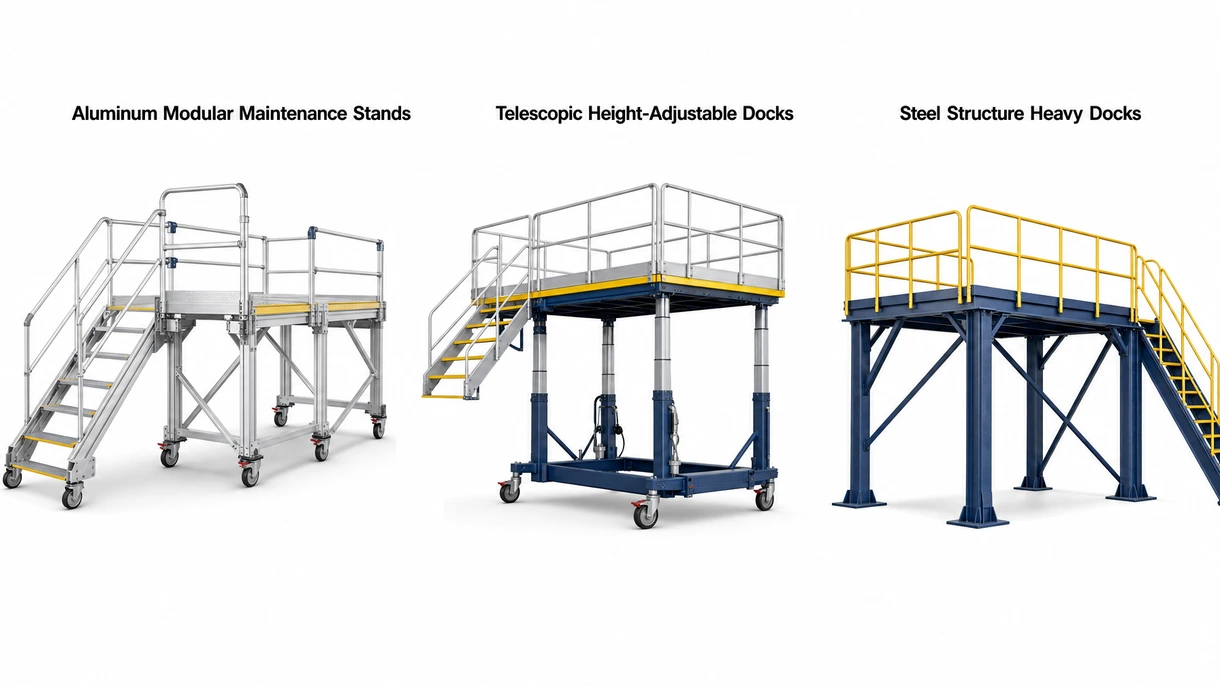
Aluminum Modular Maintenance Stands
Lightweight aluminum solutions offer superior corrosion resistance and mobility compared to steel, fitting versatile environments needing frequent layout changes. Ease of movement improves hangar turnaround time, but lower density requires precise engineering to maintain structural rigidity under heavy tool loads.
Telescopic Height-Adjustable Docks
These systems utilize advanced linear actuators to service narrow-body and wide-body aircraft using a single, adaptable docking configuration. High adaptability maximizes fleet utility across diverse hangar layouts, though mechanical complexity increases required maintenance cycles and initial procurement costs.
Steel Structure Heavy Docks
Rugged steel docks provide ultimate stability for long-term maintenance checks, though they lack the mobility required for flexible hangars. Superior load capacity supports heavy structural repairs, but extreme weight limits repositioning speed and demands substantial floor loading capacity.
6 expert tips
Prioritize modular aluminum structures to ensure rapid hangar reconfiguration when switching between different narrow-body and wide-body airframe models.
Implement laser-guided positioning sensors to prevent accidental airframe contact during docking maneuvers, significantly reducing costly structural repair expenses.
Select docking systems with integrated pneumatic and electrical outlets to eliminate hazardous floor cables and improve technician workflow.
Ensure all height-adjustable platforms include redundant fail-safe locking mechanisms to meet strict international occupational safety and health standards.
Invest in corrosion-resistant finishes to maintain structural integrity and professional appearance within high-humidity hangar environments over long lifecycles.
Mandate comprehensive operator training programs to reduce equipment damage risks and optimize the speed of docking sequence execution.
Always verify the technical certification to ensure compliance with local building safety standards and long-term durability.
Innovations and Trends
Automated guided docking systems use lidar sensors to achieve millimeter precision, eliminating human error during critical aircraft approaches.
Virtual reality integration allows engineers to simulate docking procedures before physical implementation, significantly improving safety and operational efficiency.
Implementation of Internet of Things structural health monitoring provides real-time data on load distribution, enhancing long-term maintenance stand reliability.
Light-emitting diode safety zones integrated into platform floors improve visibility for technicians working during intensive night-shift maintenance operations.
*Prices are pre-tax. They exclude delivery charges and customs duties and do not include additional charges for installation or activation options. Prices are indicative only and may vary by country, with changes to the cost of raw materials and exchange rates.
About AeroExpo
AeroExpo is a marketplace that offers B2B players a complete experience, from product sourcing to purchase. AeroExpo is an entity of VirtualExpo Group.
Are you a buyer?
Are you a supplier?