
- Home page
- buying guide
- baggage cart
baggage cart
baggage cart: A technical guide
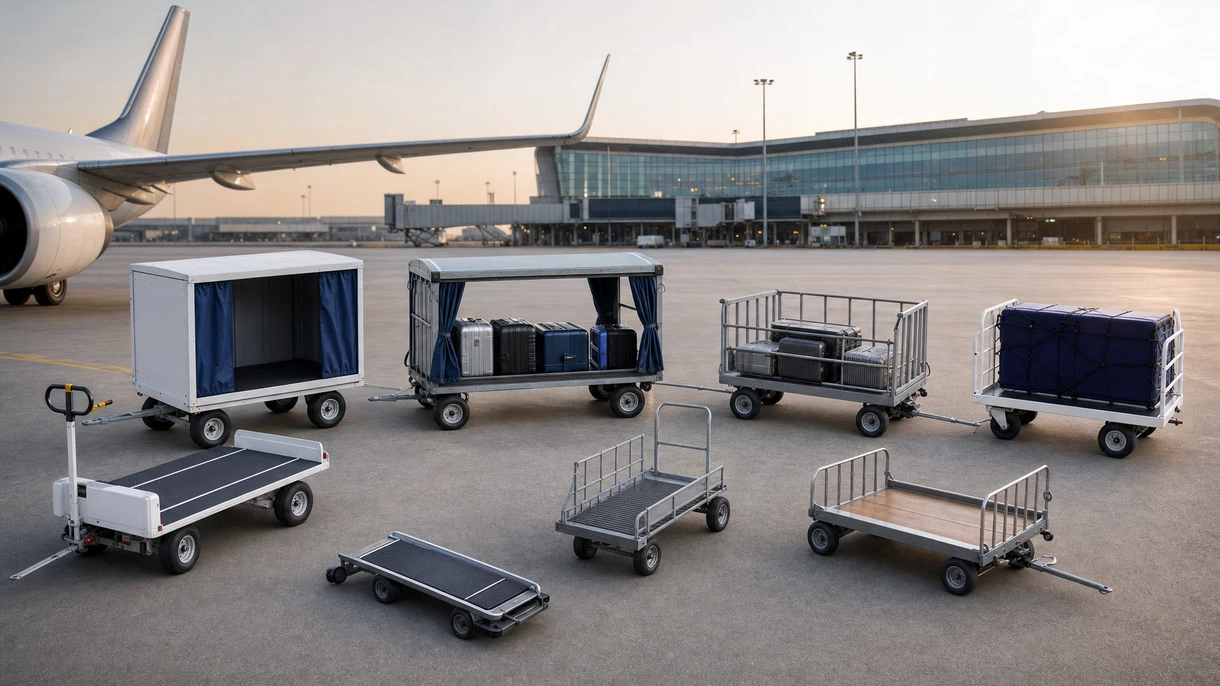
4 Criteria to choose your baggage cart
Towbar Shear Pin Integrity.
Prevents transmission of excessive stress to the tractor during sudden stops, protecting critical drivetrain components and ensuring safety.
Articulated Steering Geometry Precision.
Ensures accurate tracking during high-speed taxiway crossings, minimizing the risk of jackknifing or collisions with expensive aircraft airframes.
Galvanized Corrosion Resistance Rating.
Withstands aggressive de-icing chemicals and extreme tarmac humidity, maintaining structural reliability and preventing FOD from flaking rust particles.
Fail-Safe Braking System Activation.
Engages automatically when the towbar is raised, preventing runaway carts on inclined ramps and adhering to IATA AHM standards.
Available technologies and advantages
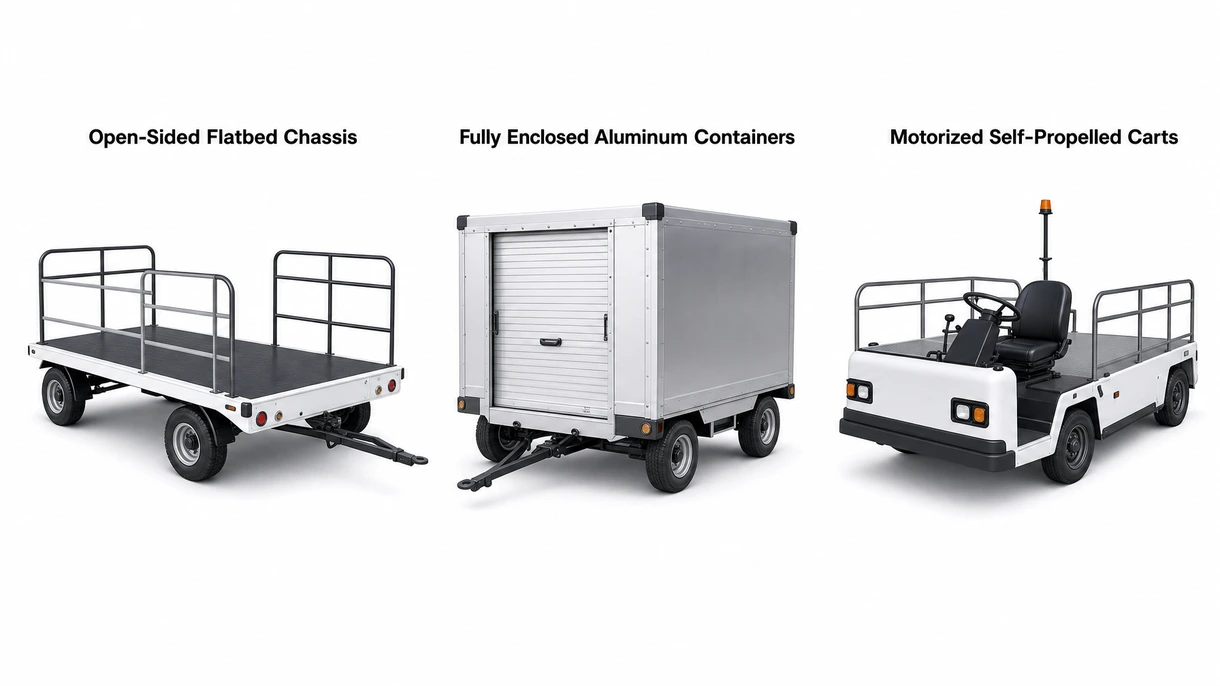
Open-Sided Flatbed Chassis.
Open-sided designs utilize heavy-duty steel frames and vinyl curtains to facilitate rapid manual loading and unloading during tight turnarounds.
Fully Enclosed Aluminum Containers.
Enclosed units feature lockable sliding doors and weather-sealed joints to provide maximum security and protection from environmental contaminants.
Motorized Self-Propelled Carts.
Integrated electric drivetrains allow for independent movement without the need for tugs, optimizing labor in smaller regional airport hubs.
6 expert tips
Prioritize carts with reinforced swivel lock systems to ensure stability during high-speed transfers across active taxiway intersections.
Evaluate the lifecycle cost of stainless steel versus carbon steel to mitigate maintenance expenditures caused by aggressive salts.
Select models featuring ergonomic towbar handles to reduce ground handler fatigue and minimize workplace injuries during manual operations.
Verify that all wheel assemblies utilize high-load polyurethane treads to reduce rolling resistance and decrease fuel consumption.
Integrate RFID tracking tags on every unit to optimize fleet utilization and prevent equipment loss during peak seasons.
Inspect the welding quality of the chassis to ensure structural integrity and prevent fatigue failures in high-vibration environments.
Always verify the technical certification to ensure compliance with local building safety standards and long-term durability.
Innovations and Trends
Real-time GPS and impact sensors allow fleet managers to monitor cart health and prevent unauthorized movements through geofencing.
Lightweight thermoplastic panels replace traditional steel, significantly reducing tug fuel burn and decreasing the total carbon footprint.
Vision-based sensor kits allow tugs to align perfectly with carts, eliminating manual labor risks and speeding up formation.
Electric motorized carts now utilize ground-embedded pads for charging, maximizing uptime by eliminating the need for physical plug-ins.
*Prices are pre-tax. They exclude delivery charges and customs duties and do not include additional charges for installation or activation options. Prices are indicative only and may vary by country, with changes to the cost of raw materials and exchange rates.
About AeroExpo
AeroExpo is a marketplace that offers B2B players a complete experience, from product sourcing to purchase. AeroExpo is an entity of VirtualExpo Group.
Are you a buyer?
Are you a supplier?