
- Home page
- buying guide
- 2-axis gimbal
2-axis gimbal
2-axis gimbal: A technical guide
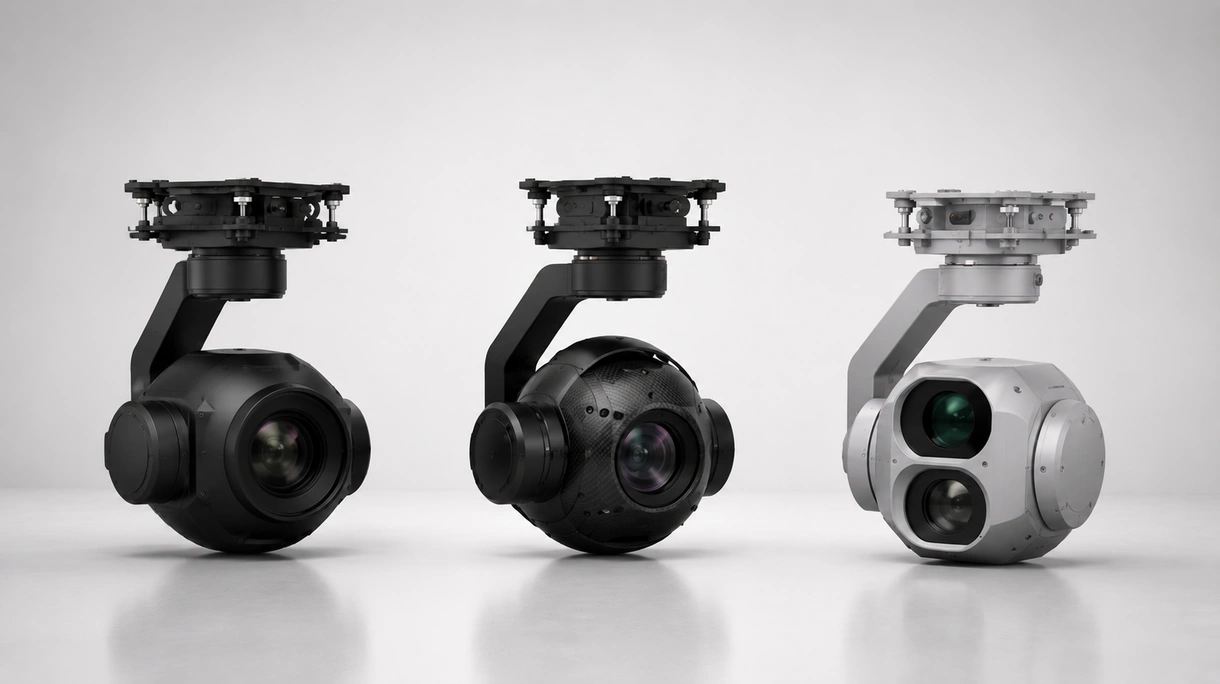
4 Criteria to choose your 2-axis gimbal
Stabilization Accuracy (Microradian Range)
Essential for high-resolution imagery and laser target designation during high-speed aerial maneuvers to ensure data integrity.
SWaP-C Optimization
Minimizing size, weight, and power consumption is critical for maximizing drone flight endurance and payload integration efficiency.
Environmental Hardening (DO-160)
Compliance with rigorous vibration, temperature, and electromagnetic interference standards ensures operational reliability in demanding aerospace mission profiles.
Latency-Free Control Response
Immediate feedback loops are vital for real-time surveillance and tracking systems to maintain target lock during maneuvers.
Available technologies and advantages
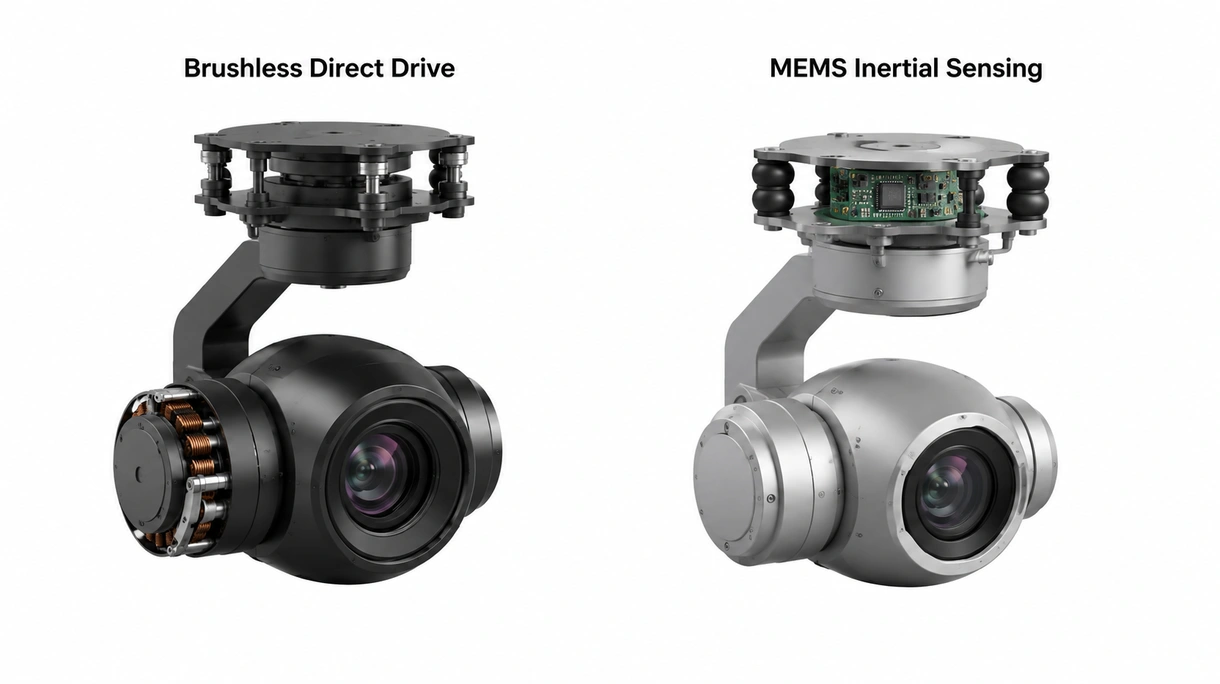
Brushless Direct Drive
These high-torque motors provide silent, gearless operation which offers significantly smoother stabilization and lower mechanical backlash than traditional geared assemblies in aerial environments. Benefits include reduced maintenance and high reliability, though they require sophisticated control electronics and can be heavier than equivalent brushed options.
MEMS Inertial Sensing
Integrating micro-electromechanical systems allows for extremely compact stabilization logic that fits within the tight volumetric constraints of tactical unmanned systems. This technology enables low-cost production and high shock resistance, yet it often suffers from higher thermal drift compared to fiber-optic gyroscope alternatives.
6 expert tips
Prioritize units with FAA or EASA airworthiness certification to ensure seamless integration into regulated commercial or military airspace. Always verify the technical certification to ensure compliance with local building safety standards and long-term durability.
Evaluate the mean time between failures to minimize total cost of ownership across the aircraft service life cycle. Always verify the technical certification to ensure compliance with local building safety standards and long-term durability.
Assess software compatibility with existing ground control stations to prevent proprietary lock-in and ensure scalable fleet deployment strategies. Always verify the technical certification to ensure compliance with local building safety standards and long-term durability.
Select gimbal systems featuring modular payload interfaces to facilitate rapid sensor upgrades without requiring complete hardware overhauls. Always verify the technical certification to ensure compliance with local building safety standards and long-term durability.
Demand rigorous electromagnetic compatibility testing data to prevent interference with sensitive avionics and communication systems during flight. Always verify the technical certification to ensure compliance with local building safety standards and long-term durability.
Verify the availability of global maintenance support networks to reduce aircraft on ground time for critical missions. Always verify the technical certification to ensure compliance with local building safety standards and long-term durability.
Innovations and Trends
Edge computing algorithms predict airframe vibration patterns to pre-emptively stabilize the payload, significantly enhancing long-range optical clarity.
New fiber-optic rotary joints support ultra-high-definition video transmission without signal degradation or electromagnetic interference during flight.
Advanced composite integration reduces gimbal mass by thirty percent, directly increasing the loitering time of tactical drones.
Precision GPS-slaved targeting allows sensors to maintain coordinates automatically, simplifying pilot workloads during complex search missions.
*Prices are pre-tax. They exclude delivery charges and customs duties and do not include additional charges for installation or activation options. Prices are indicative only and may vary by country, with changes to the cost of raw materials and exchange rates.
About AeroExpo
AeroExpo is a marketplace that offers B2B players a complete experience, from product sourcing to purchase. AeroExpo is an entity of VirtualExpo Group.
Are you a buyer?
Are you a supplier?