
- Home page
- buying guide
- surveillance UAV
surveillance UAV
surveillance UAV: A technical guide
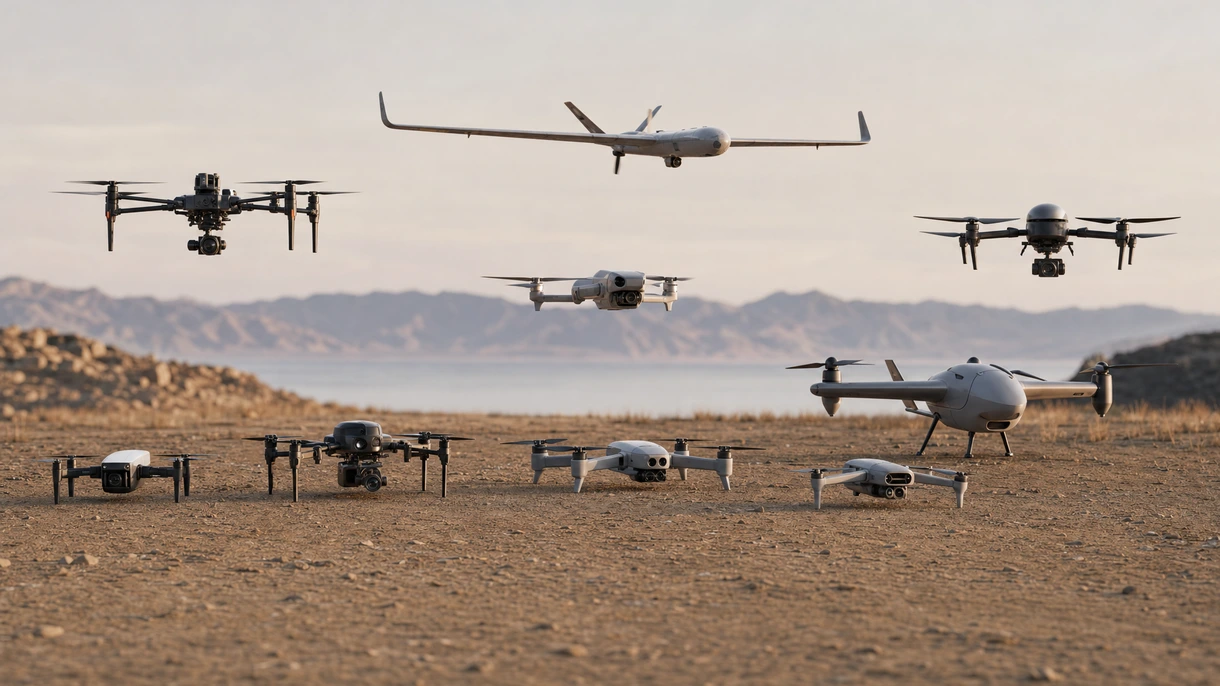
4 Criteria to choose your surveillance UAV
Operational Flight Endurance
Maximizing time-on-station ensures continuous situational awareness while minimizing the logistical footprint and frequency of launch and recovery cycles.
Payload Sensor Integration
High-definition electro-optical and infrared sensors must integrate seamlessly with flight controllers to deliver actionable intelligence in diverse environments.
Data Link Security
Military-grade encryption and anti-jamming capabilities are essential for maintaining secure communication and preventing unauthorized access to sensitive surveillance.
Regulatory Airspace Compliance
Adherence to EASA and FAA Type Certification ensures the platform meets strict safety standards for integration into national airspaces.
Available technologies and advantages
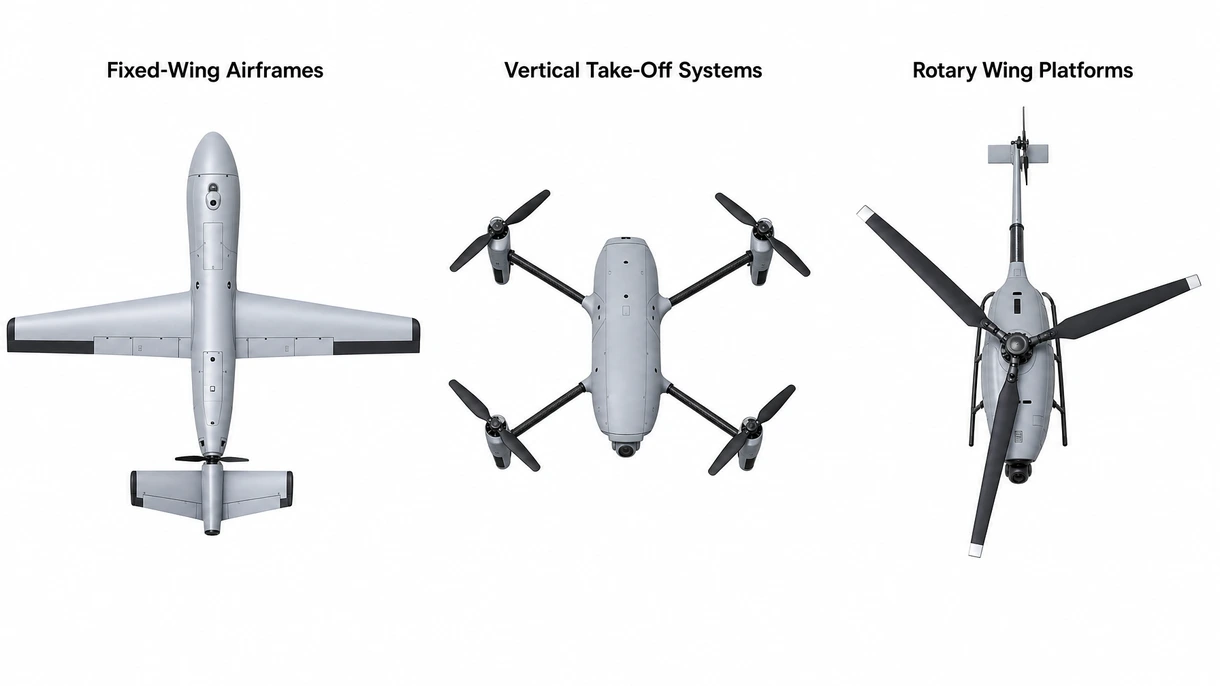
Fixed-Wing Airframes
These platforms provide superior aerodynamic efficiency and extended mission ranges compared to rotorcraft, although they necessitate runways or catapult systems for takeoff. They maximize operational radius but lack the hovering agility required for stationary target tracking or operations in restricted urban flight environments.
Vertical Take-Off Systems
Vertical take-off systems integrate rotorcraft versatility with fixed-wing glide efficiency, effectively removing the requirement for prepared runways while maintaining high cruise speeds. Mechanical complexity increases weight and reduces payload capacity, representing a trade-off between logistical flexibility and total sensor weight or battery volume.
Rotary Wing Platforms
Rotary wing platforms deliver exceptional maneuverability and precise hovering capabilities for close-range surveillance, contrasting with the high-speed forward flight of fixed-wing models. High energy consumption significantly limits flight endurance, forcing a trade-off where operational flexibility is prioritized over long-range coverage or persistent station-keeping.
6 expert tips
Prioritize airframes with existing FAA or EASA Type Certification to ensure immediate legal operation within complex non-segregated airspaces.
Evaluate the lifecycle cost by analyzing the availability of certified spare parts and the complexity of scheduled maintenance.
Verify that the ground control station architecture allows for multi-platform management and seamless integration with existing command systems.
Ensure the onboard data processing unit can handle edge computing to reduce latency during real-time target identification tasks.
Select modular sensor payloads that allow for rapid field swaps between thermal, multispectral, and high-resolution optical hardware.
Confirm the cybersecurity protocols meet current military standards to protect the integrity of the mission data and telemetry.
Always verify the technical certification to ensure compliance with local building safety standards and long-term durability.
Innovations and Trends
Integration of hydrogen power systems triples flight endurance while maintaining zero-emission profiles for long-endurance strategic surveillance missions.
Onboard artificial intelligence enables autonomous target classification and anomaly detection, significantly reducing the bandwidth required for data transmission.
Advanced algorithms allow multiple UAVs to operate as a coordinated unit, expanding coverage area and improving mission redundancy.
Low Earth Orbit satellite connectivity provides global operational reach and robust control beyond line-of-sight in remote environments.
*Prices are pre-tax. They exclude delivery charges and customs duties and do not include additional charges for installation or activation options. Prices are indicative only and may vary by country, with changes to the cost of raw materials and exchange rates.
About AeroExpo
AeroExpo is a marketplace that offers B2B players a complete experience, from product sourcing to purchase. AeroExpo is an entity of VirtualExpo Group.
Are you a buyer?
Are you a supplier?