
- Home page
- buying guide
- emergency parachute
emergency parachute
emergency parachute: A technical guide
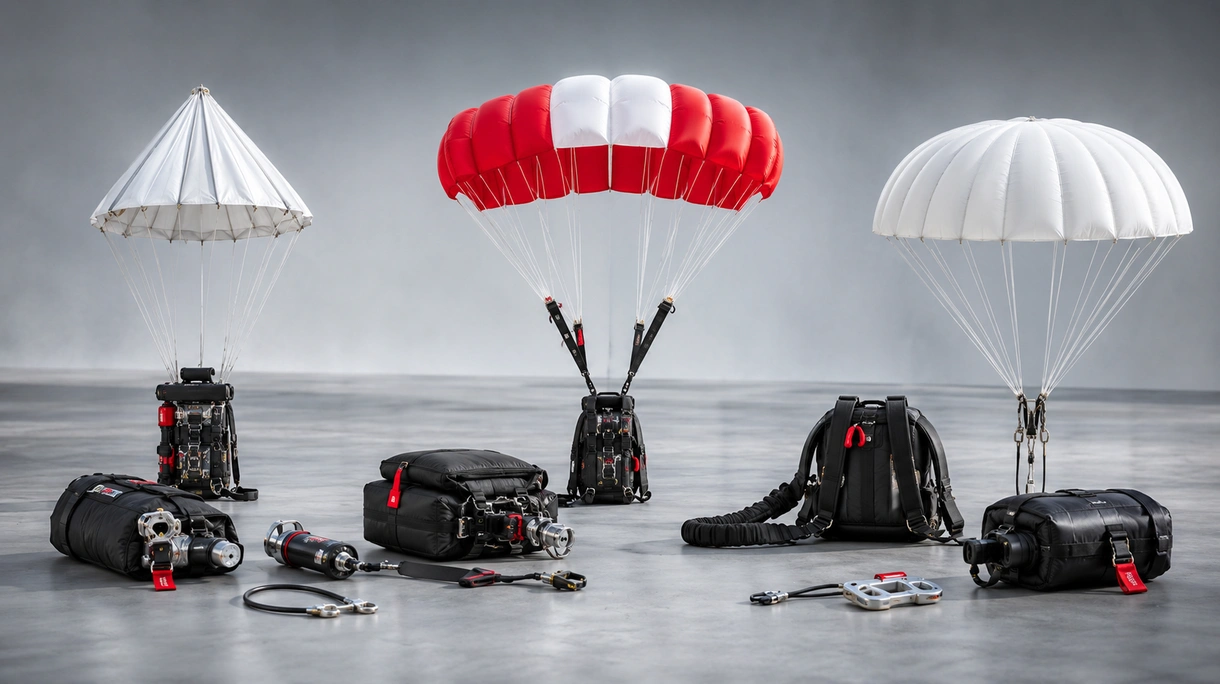
4 Criteria to choose your emergency parachute
Deployment Speed and Reliability
Vital for low-altitude survivability; must exceed established certification standards to ensure immediate canopy inflation in high-stress scenarios.
System Weight and Volume
Critical for payload optimization; lightweight composite housings minimize center of gravity shifts and preserve useful load for mission-critical aerospace sensors.
Load Bearing Certification
Structural integrity must align with maximum weight specifications to prevent catastrophic descent rates during high-velocity deployments at maximum airframe weight.
Maintenance and Repack Cycles
Long-term operational costs depend on service intervals; extended cycles reduce aircraft downtime and lower the total cost of ownership.
Available technologies and advantages
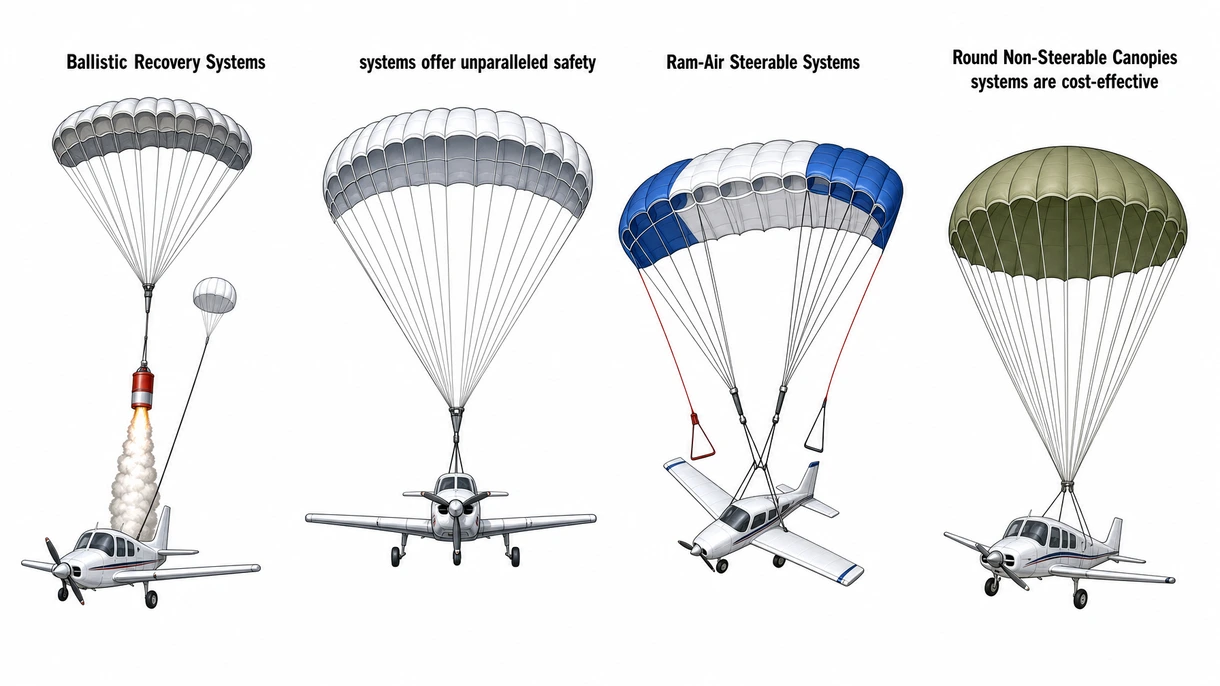
Ballistic Recovery Systems
Ballistic Recovery Systems provide rapid airframe recovery through pyrotechnic deployment, ensuring immediate canopy inflation during low-altitude emergencies where gravity-based systems might fail to deploy.
Operational Tradeoffs
These systems offer unparalleled safety for light aircraft but add significant weight and require specialized hazardous material handling during transportation or maintenance cycles.
Ram-Air Steerable Systems
Ram-Air Steerable Systems utilize pressurized wing-shaped canopies to allow pilots to maneuver during descent, facilitating precise landing zone selection and significantly reducing the risk of ground-based collisions.
Operational Tradeoffs
While offering superior directional control and reduced landing impact forces, they demand higher pilot skill levels and involve greater mechanical complexity compared to traditional round canopies.
Round Non-Steerable Canopies
Round Non-Steerable Canopies represent the baseline technology for emergency extraction, utilizing high-drag circular designs to maximize descent stability and minimize the technical failure points during airframe deployments.
Operational Tradeoffs
These systems are cost-effective and highly reliable for basic recovery needs, though they offer no directional control and may result in higher impact velocities upon touchdown.
6 expert tips
Verify standardized technical orders or european certification to ensure global airworthiness compliance and mitigate liability risks during cross-border flight operations.
Prioritize systems with pyrotechnic deployment mechanisms to guarantee instantaneous inflation during low-altitude loss of control or engine failure.
Evaluate the manufacturer service network to minimize turnaround times during mandatory repacking cycles and ensure continuous fleet availability.
Assess canopy material durability and ultraviolet resistance to extend the service life of safety equipment in harsh environments.
Integrate data-linked deployment sensors to automatically trigger recovery sequences when airframe structural limits or abnormal attitudes are detected.
Standardize emergency systems across your fleet to reduce pilot training complexity and streamline logistical maintenance support requirements.
Always verify the technical certification to ensure compliance with local building safety standards and long-term durability.
Innovations and Trends
Autonomous drone recovery systems utilize artificial intelligence to trigger deployments instantly upon detecting anomalous flight patterns or motor failure.
Advanced ultralight materials utilize high-tenacity polymers to reduce pack volume significantly while maintaining structural load integrity.
Pyrotechnic ignition improvements ensure reliable deployment at extremely low altitudes, significantly increasing the survivability envelope for urban mobility.
Integrated health monitoring sensors track canopy humidity and temperature, providing predictive maintenance alerts to prevent fabric degradation issues.
*Prices are pre-tax. They exclude delivery charges and customs duties and do not include additional charges for installation or activation options. Prices are indicative only and may vary by country, with changes to the cost of raw materials and exchange rates.
About AeroExpo
AeroExpo is a marketplace that offers B2B players a complete experience, from product sourcing to purchase. AeroExpo is an entity of VirtualExpo Group.
Are you a buyer?
Are you a supplier?