
- Home page
- buying guide
- process software
process software
process software: A technical guide
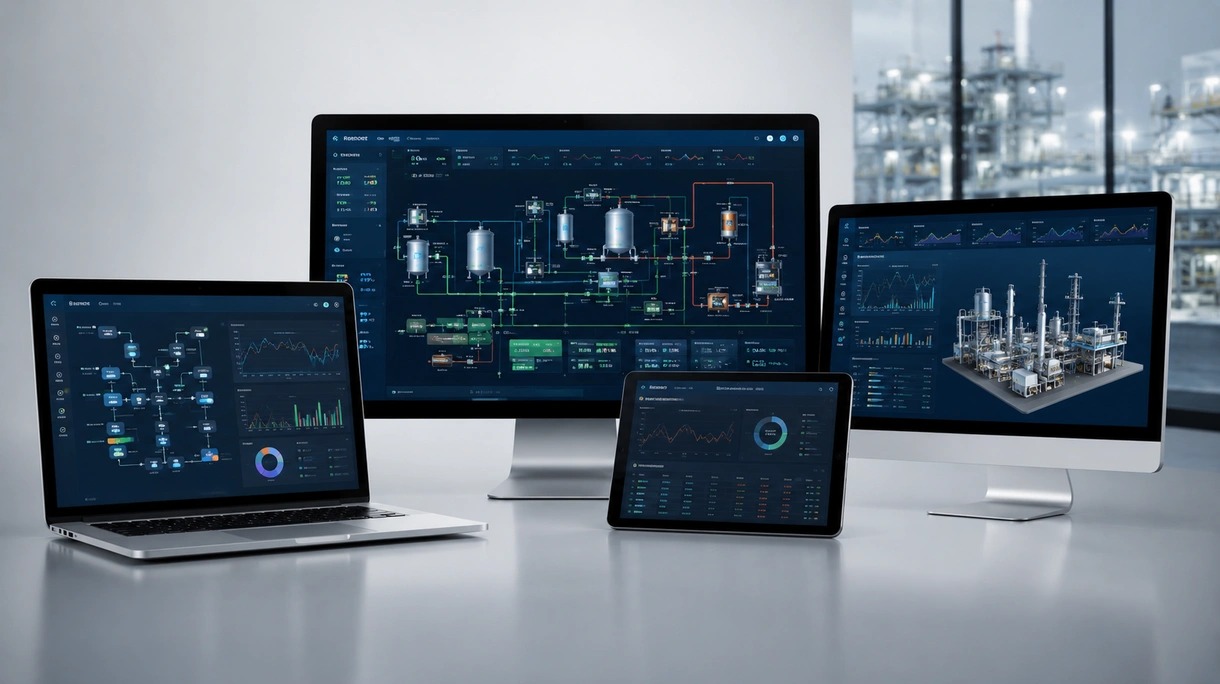
4 Criteria to choose your process software
AS9100 Regulatory Compliance Traceability
Ensures every digital footprint adheres to EASA and FAA quality management systems for flight safety and component accountability.
Real-time Digital Twin Synchronization
Bridges physical production with virtual models to predict structural fatigue and maintenance intervals through high-fidelity sensor data streams.
Multi-tier Supply Chain Integration
Connects disparate ERP systems across global tiers to maintain material integrity and visibility during high-rate narrow-body production cycles.
Deterministic Latency Performance Optimization
Guarantees sub-millisecond response times for safety-critical avionics manufacturing processes and autonomous flight control logic execution in real-time.
Available technologies and advantages
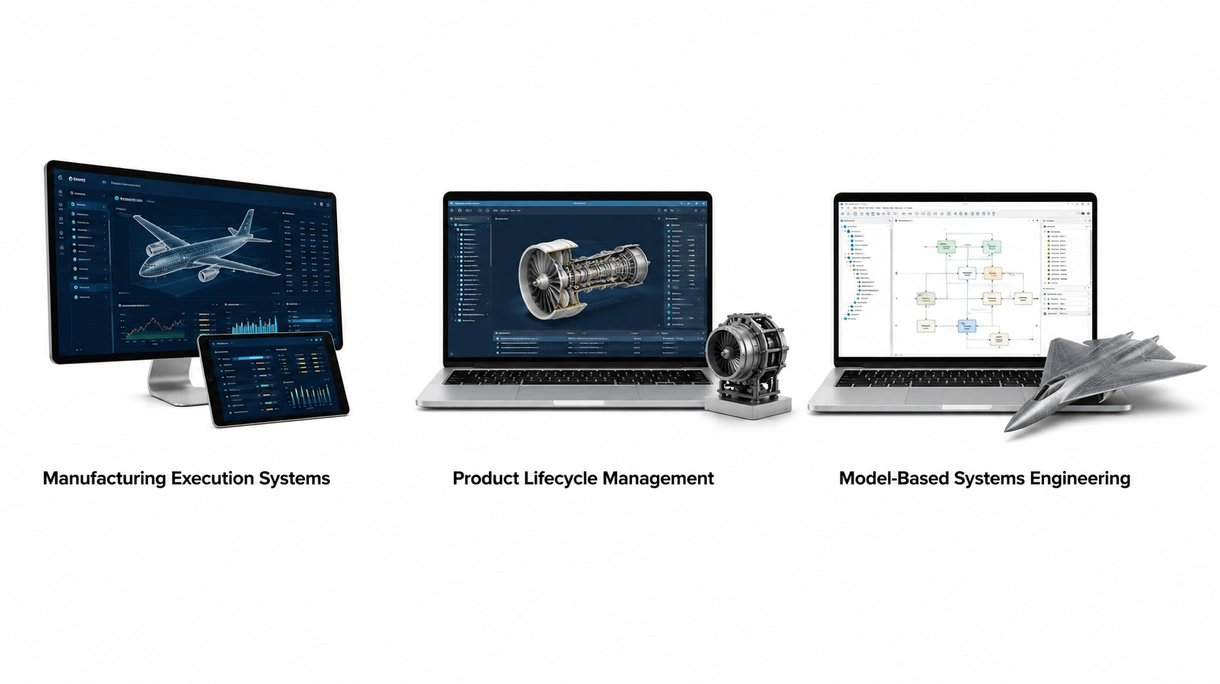
Manufacturing Execution Systems
Manufacturing Execution Systems provides a technical bridge between ERP and factory floor controllers for high-precision assembly operations and composite layup monitoring while ensuring full traceability.
MES Operational Profile
Advantages include automated compliance data collection and reduced rework. Limitations involve high implementation costs. The trade-off requires balancing real-time oversight against initial capital expenditure for sensor integration.
Product Lifecycle Management
Product Lifecycle Management centralizes complex CAD data and engineering change orders across the aircraft lifespan from design to decommissioning while managing complex configurations.
PLM Operational Profile
Advantages include streamlined certification and unified data sources. Limitations involve interoperability gaps with legacy systems. The trade-off involves prioritizing long-term data continuity over rapid tool deployment schedules.
Model-Based Systems Engineering
Model-Based Systems Engineering utilizes visual modeling for defining and documenting complex aerospace systems to replace traditional document-centric approaches while validating critical designs.
MBSE Operational Profile
Advantages include early error detection and enhanced safety verification. Limitations involve a steep learning curve for staff. The trade-off entails front-loading development costs to reduce downstream testing failures.
6 expert tips
Prioritize software offering full DO-178C compliance to guarantee flight safety and streamline mandatory FAA certification for critical avionics.
Select platforms featuring native integration for AS9100 standards to ensure continuous quality management and automated audit trail generation.
Validate the software ability to manage massive datasets from IoT sensors to improve predictive maintenance accuracy for airframes.
Ensure the solution supports secure cloud-based collaboration between European and American engineering teams to accelerate global development timelines.
Assess the scalability of the licensing model to accommodate fluctuating production rates for commercial aircraft and drone fleets.
Always verify the technical certification to ensure compliance with local building safety standards and long-term durability.
Innovations and Trends
Blockchain integration for aerospace parts tracking provides immutable records for Part 145 repair stations and global customs authorities.
Artificial intelligence driven generative design reduces airframe weight by twenty percent while maintaining strict structural integrity requirements.
Augmented reality process overlays reduce assembly errors in complex wire harness installations by forty percent during initial builds.
Cloud-native certification management tools automate the submission of EASA Form 1 documents to accelerate aircraft delivery timelines.
*Prices are pre-tax. They exclude delivery charges and customs duties and do not include additional charges for installation or activation options. Prices are indicative only and may vary by country, with changes to the cost of raw materials and exchange rates.
About AeroExpo
AeroExpo is a marketplace that offers B2B players a complete experience, from product sourcing to purchase. AeroExpo is an entity of VirtualExpo Group.
Are you a buyer?
Are you a supplier?