
- Home page
- buying guide
- amphibious aircraft
amphibious aircraft
amphibious aircraft: A technical guide
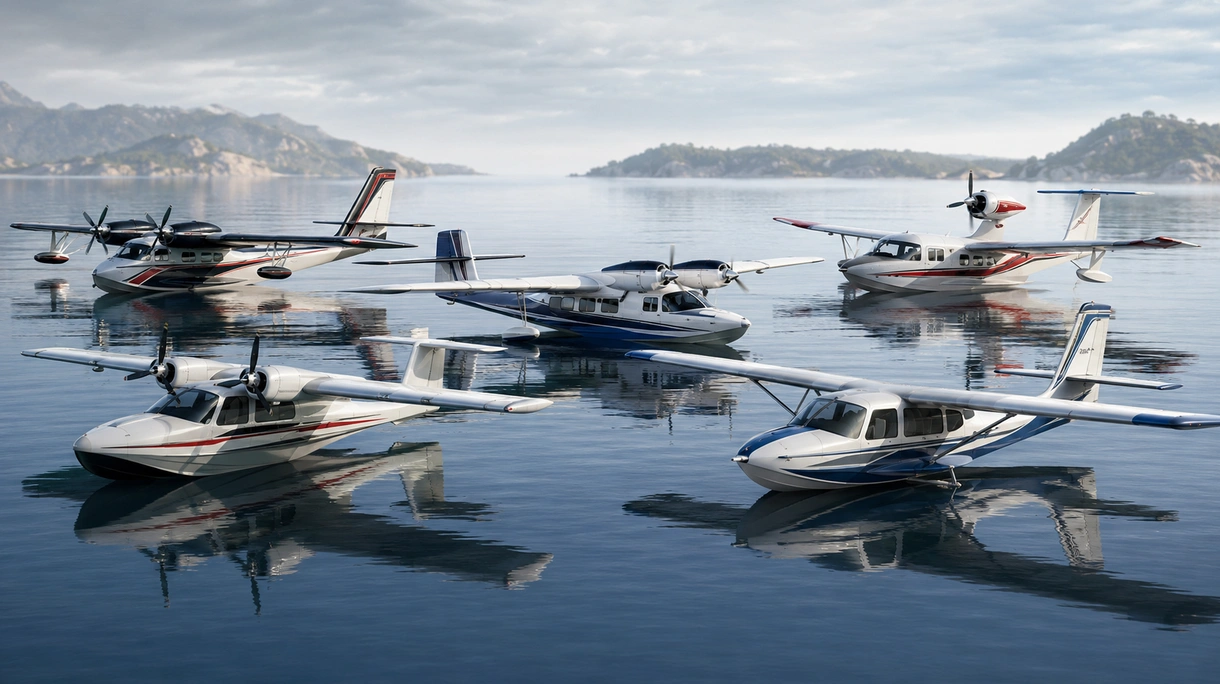
4 Criteria to choose your amphibious aircraft
Hull Corrosion Resistance
Saltwater operations demand high-grade alloys or composite protection to ensure long-term structural integrity and reduced unscheduled airframe maintenance.
Maximum Wave Height Limits
Certification for specific Sea States dictates operational availability in coastal regions where high-frequency swell conditions impact take-off safety.
Multi-Terrain Landing Gear
Robust retractable landing systems must balance weight constraints against high impact loads encountered during unpaved runway or water landings.
Payload Range Capability
High-performance mission profiles require specific fuel-to-weight ratios to maintain profitability across diverse remote island or firefighting logistics.
Available technologies and advantages
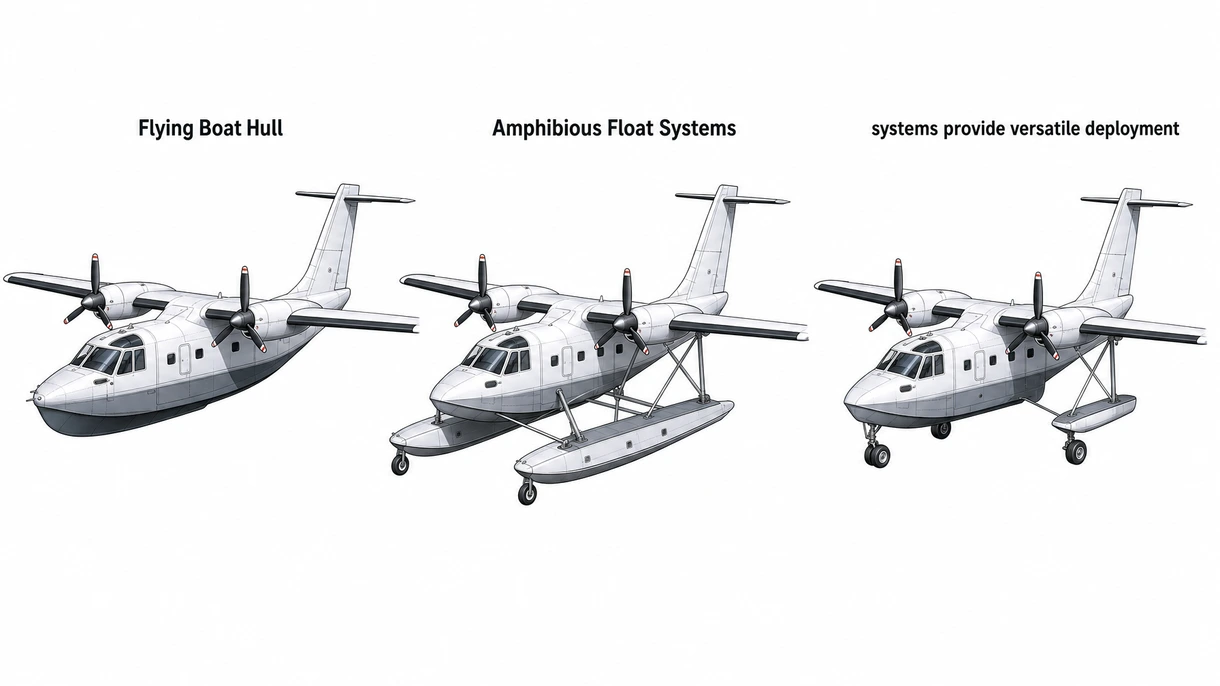
Flying Boat Hull
This configuration integrates the fuselage into a buoyant hull, providing superior stability in high sea states compared to float-equipped variants.
Operational Trade-offs
Advantages include high hydrodynamic efficiency and structural durability, but limitations involve increased weight and complex maintenance of water-tight fuselage seals.
Amphibious Float Systems
Specialized floats with retractable wheels allow standard airframes to operate from water, offering flexibility for existing fleet operators across regions.
Operational Trade-offs
These systems provide versatile deployment but suffer from significant aerodynamic drag and reduced useful payload compared to dedicated hull designs.
6 expert tips
Conduct comprehensive life-cycle cost analysis focusing on corrosion-resistant materials to ensure long-term airworthiness and reduced unscheduled structural maintenance.
Evaluate airframe fatigue life under frequent water-landing cycles to guarantee safety margins remain within FAA and EASA certification limits.
Prioritize powerplants with high salt-ingestion tolerance to maximize engine time-between-overhauls in demanding maritime or coastal operational environments.
Select airframes featuring modular avionics suites to enable seamless integration with modern search and rescue or firefighting sensor packages.
Verify that existing ground support equipment at remote terminals can handle the specific maintenance requirements of complex amphibious landing systems.
Always verify the technical certification to ensure compliance with local building safety standards and long-term durability.
Innovations and Trends
Zero-emission electric motors reduce environmental impact and noise signatures while lowering operational costs for short-range regional island hopping.
Integration of carbon-fiber materials significantly reduces airframe weight while enhancing resistance to saltwater corrosion and high-impact water loads.
Sensor-fusion technology utilizes LIDAR and radar to assist pilots during difficult glassy-water landings or high-swell sea conditions.
High-flow water scooping systems improve the efficiency of aerial firefighting missions by increasing the volume of water delivered.
*Prices are pre-tax. They exclude delivery charges and customs duties and do not include additional charges for installation or activation options. Prices are indicative only and may vary by country, with changes to the cost of raw materials and exchange rates.
About AeroExpo
AeroExpo is a marketplace that offers B2B players a complete experience, from product sourcing to purchase. AeroExpo is an entity of VirtualExpo Group.
Are you a buyer?
Are you a supplier?