
- Home page
- buying guide
- helicopter simulator
helicopter simulator
helicopter simulator: A technical guide
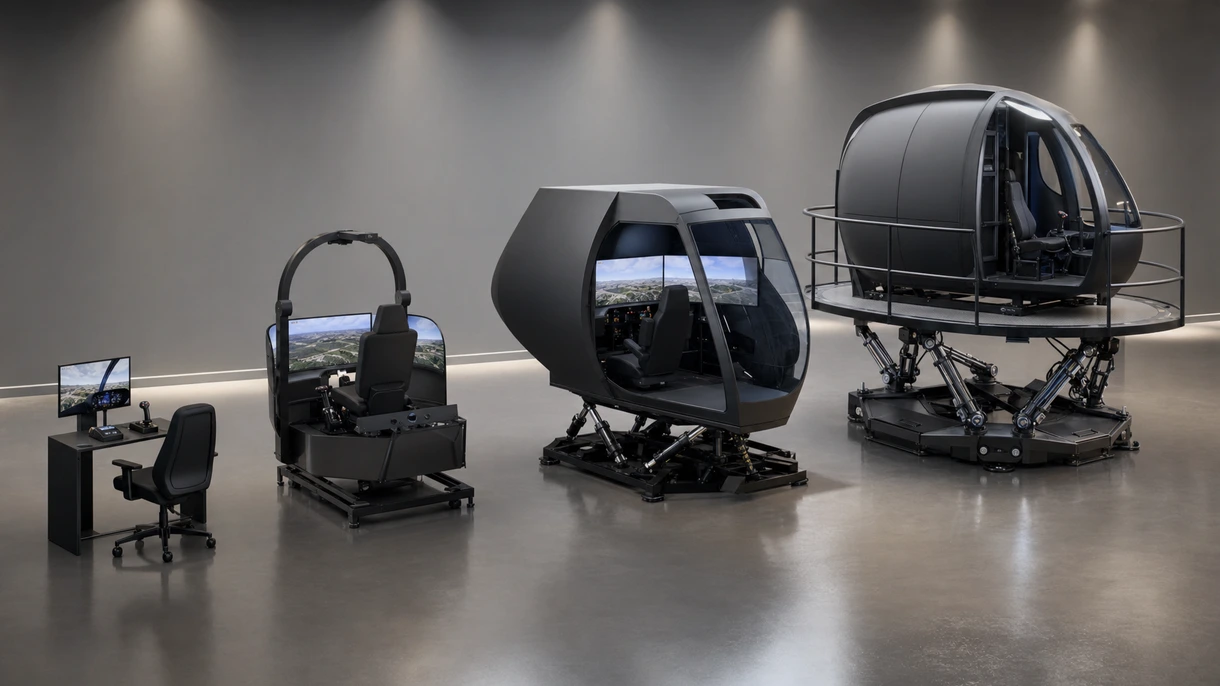
4 Criteria to choose your helicopter simulator
FAA EASA Level D
Level D qualification ensures full-motion fidelity and visual realism necessary for zero flight time credits and advanced recurrent training.
Motion System Dynamic Fidelity
High-frequency vibration and multi-axis movement replication are essential for mastering vortex ring state recovery and confined area landing procedures.
OEM Avionics Hardware Integration
Using actual aircraft flight control computers and glass cockpit displays minimizes negative training and ensures seamless pilot transition to aircraft.
Technical Lifecycle Support Services
Reliable technical assistance and spare parts availability are vital for maintaining high simulator uptime and maximizing return on investment.
Available technologies and advantages
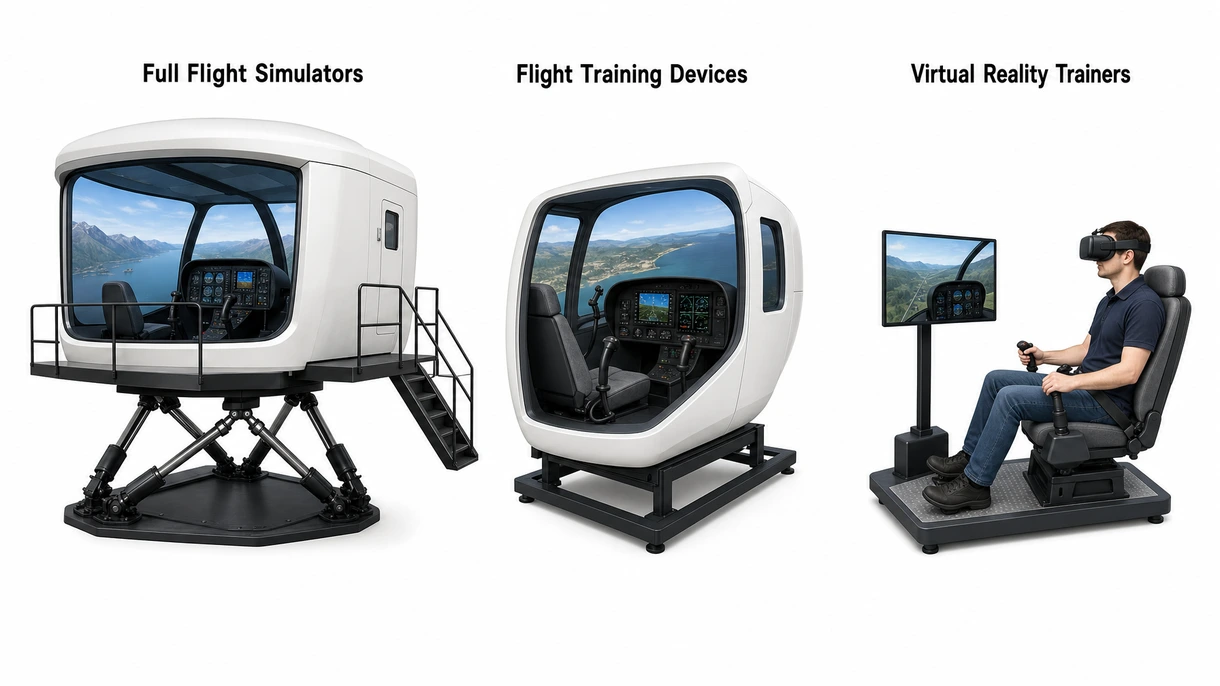
Full Flight Simulators
utilize multi-axis motion bases combined with wide-field visual systems to replicate complete helicopter operating environments through high-fidelity hardware integration.
Full Flight Simulators
offer maximum training credit and realism but require significant capital expenditure, large specialized facilities, and intensive maintenance routines for operation.
Flight Training Devices
provide high-fidelity cockpit layouts and flight models without full motion systems, focusing on procedural training and instrument proficiency requirements.
Flight Training Devices
offer cost-effective skill development and smaller facility footprints, though they lack the physical cues necessary for complex emergency maneuver training.
Virtual Reality Trainers
employ head-mounted displays and physical flight controls to create immersive environments for spatial orientation and tactical mission exercises.
Virtual Reality Trainers
offer unmatched portability and lower costs, but regulatory authorities currently limit their use for primary certification and type rating training credits.
6 expert tips
Prioritize simulators featuring swappable cockpit modules to support multiple helicopter types within a single motion platform infrastructure footprint.
Demand open-architecture software systems to enable rapid updates of navigation databases and specific airport terrain modeling for missions.
Select vendors offering integrated instructional operating stations that provide comprehensive data playback and objective pilot performance grading metrics.
Evaluate total power consumption and cooling requirements to ensure facility infrastructure can handle the high electrical demand of motion.
Ensure the visual system includes high-resolution infrared textures to facilitate effective night vision Goggle training for emergency medical services.
Verify that the flight model has been validated against original equipment manufacturer flight test data for maximum aerodynamic accuracy.
Always verify the technical certification to ensure compliance with local building safety standards and long-term durability.
Innovations and Trends
. Blending physical cockpits with digital visuals enhances tactile feedback while providing limitless external environmental scenarios for complex training.
. Leveraging fleet-wide telemetry data allows training centers to identify common pilot errors and optimize curriculum for safety improvements.
. Transitioning from hydraulic to electric motion bases reduces environmental impact and lowers maintenance costs through improved energy efficiency.
. AI-driven virtual instructors provide real-time feedback and adapt mission difficulty based on the specific physiological responses of pilots.
*Prices are pre-tax. They exclude delivery charges and customs duties and do not include additional charges for installation or activation options. Prices are indicative only and may vary by country, with changes to the cost of raw materials and exchange rates.
About AeroExpo
AeroExpo is a marketplace that offers B2B players a complete experience, from product sourcing to purchase. AeroExpo is an entity of VirtualExpo Group.
Are you a buyer?
Are you a supplier?