
- Home page
- buying guide
- surveillance radar
surveillance radar
surveillance radar: A technical guide
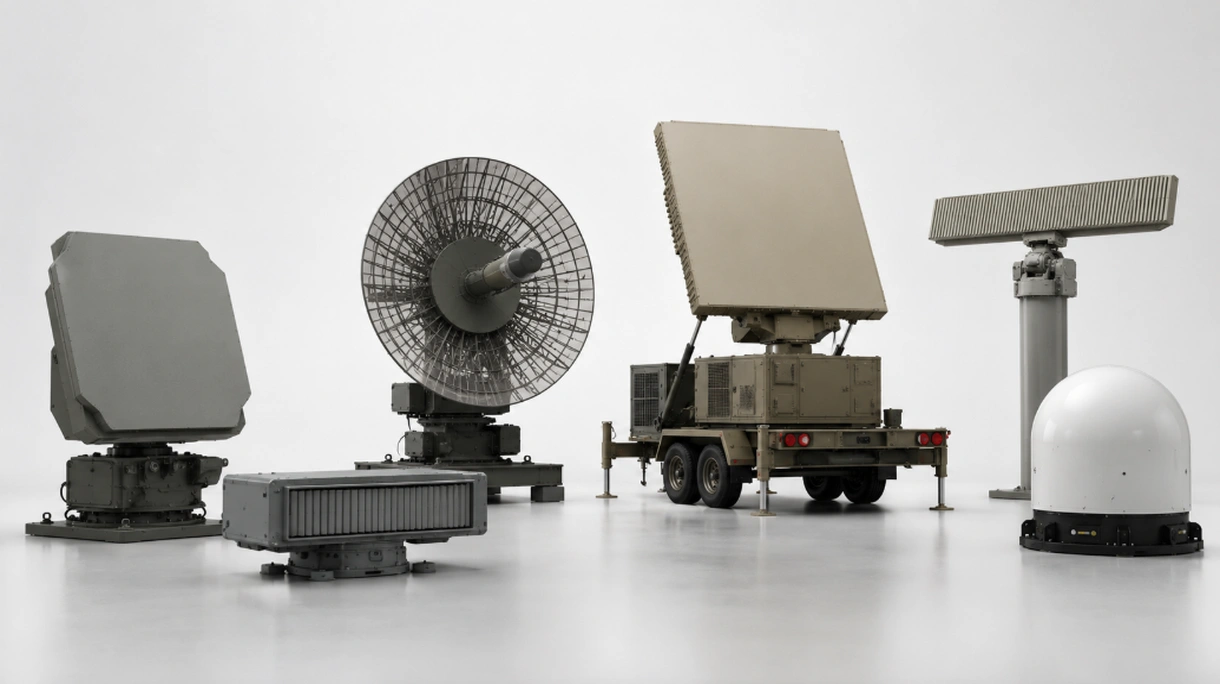
4 Criteria to choose your surveillance radar
Probability of detection
High detection probability ensures reliable identification of small RCS targets like drones or debris in complex airport environments.
System update rate
High frequency data refreshing is mandatory for real-time tracking of high-velocity aircraft during critical final approach flight phases.
Signal processing robustness
Advanced clutter rejection algorithms must isolate moving targets from static ground infrastructure to maintain strict aerospace safety standards.
Regulatory certification compliance
Hardware must meet EASA or FAA standards to ensure seamless integration into controlled civil and military airspace environments.
Available technologies and advantages
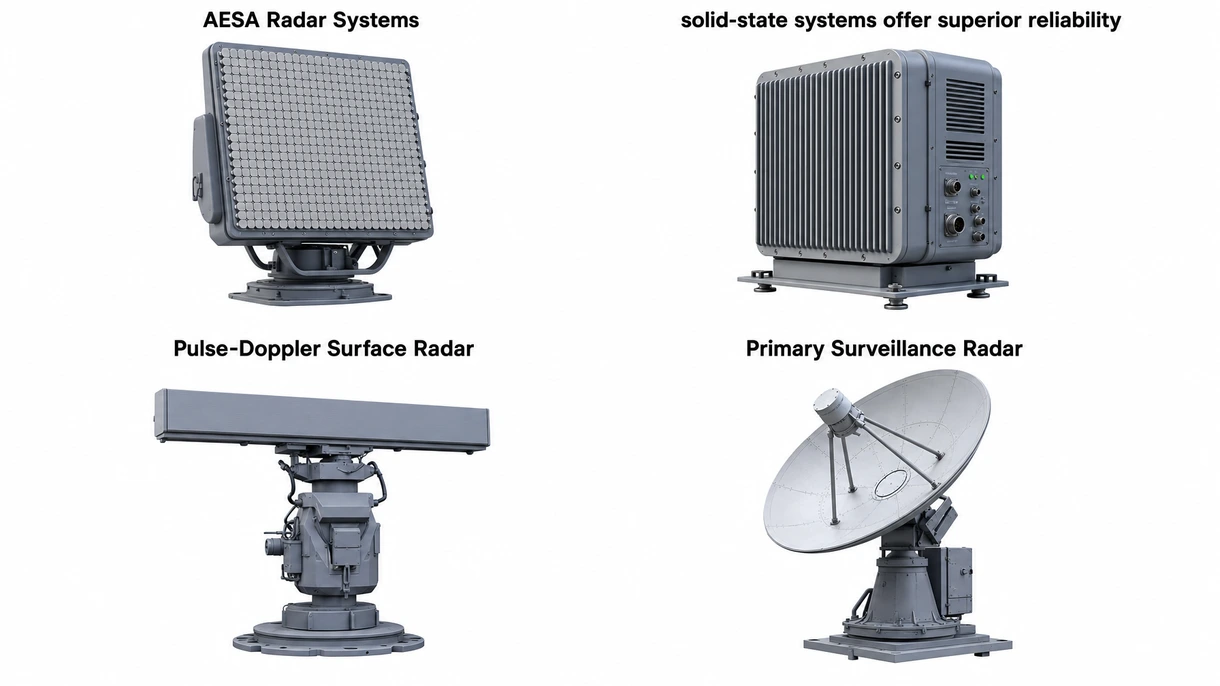
AESA Radar Systems
Active electronically scanned arrays provide beam agility and simultaneous multi-mode tracking for dense terminal maneuvering areas and drones in high-traffic airports.
Operational Assessment
These solid-state systems offer superior reliability and lower maintenance costs despite their significantly higher initial capital expenditure and complex cooling requirements.
Pulse-Doppler Surface Radar
These systems excel at detecting ground movements on runways and taxiways by filtering stationary airport noise through velocity tracking and signal filtering.
Operational Assessment
They provide cost-effective airport surface movement monitoring but suffer from blind speeds and limited elevation coverage for approaching aircraft targets.
Primary Surveillance Radar
High-power PSR operates independently of aircraft transponders to detect any physical object within the specific aeronautical security perimeter zones and airspaces.
Operational Assessment
It remains the baseline for non-cooperative target detection despite higher power consumption and significant susceptibility to complex atmospheric interference patterns.
6 expert tips
Select AESA units. Always verify the technical certification to ensure compliance with local building safety standards and long-term durability.
Mandate sensor fusion. Always verify the technical certification to ensure compliance with local building safety standards and long-term durability.
Prioritize target sensitivity. Always verify the technical certification to ensure compliance with local building safety standards and long-term durability.
Assess spectral compatibility. Always verify the technical certification to ensure compliance with local building safety standards and long-term durability.
Ensure software scalability. Always verify the technical certification to ensure compliance with local building safety standards and long-term durability.
Validate system uptime. Always verify the technical certification to ensure compliance with local building safety standards and long-term durability.
Innovations and Trends
AI-driven adaptive waveform selection optimizes detection performance in dynamic environments while reducing false alarms from environmental clutter.
Modern surveillance systems now combine traditional air traffic monitoring with specialized low-RCS tracking for airport drone protection.
Emerging bistatic configurations utilize existing environmental signals for stealthy, interference-free monitoring of congested urban and airport airspaces.
Modular digital architectures allow rapid deployment of performance upgrades without replacing expensive physical transceiver hardware components.
*Prices are pre-tax. They exclude delivery charges and customs duties and do not include additional charges for installation or activation options. Prices are indicative only and may vary by country, with changes to the cost of raw materials and exchange rates.
About AeroExpo
AeroExpo is a marketplace that offers B2B players a complete experience, from product sourcing to purchase. AeroExpo is an entity of VirtualExpo Group.
Are you a buyer?
Are you a supplier?