
hose
hose: A technical guide
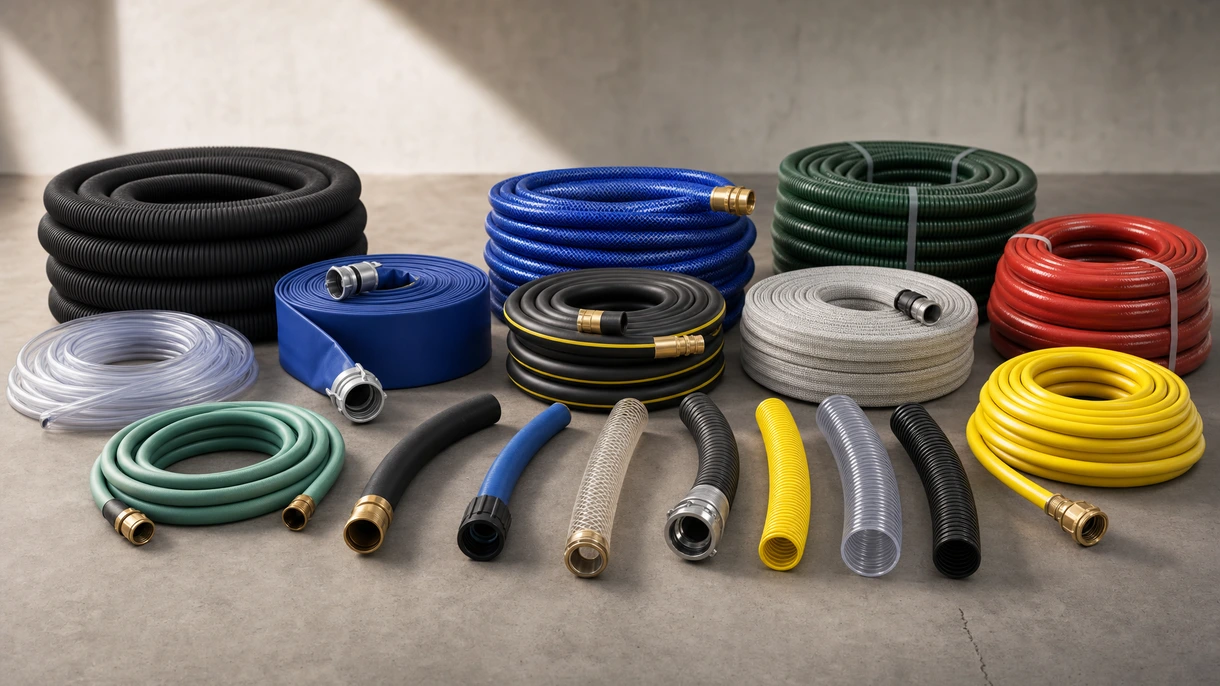
4 Criteria to choose your hose
Certification Traceability Compliance
Must meet international technical standard order requirements for safety and airworthiness across all flight and ground operations.
Pressure Temperature Ratings
Material must withstand hydraulic pressures up to five thousand pounds per square inch and extreme thermal variations during flight.
Chemical Fluid Compatibility
Elastomers must resist degradation from specialized hydraulic fluid, jet fuels, and de-icing chemicals used in harsh environments.
Flexibility Bend Radius
Minimum bend radius must allow installation in tight nacelle or landing gear spaces without risking kinking or failure.
Available technologies and advantages
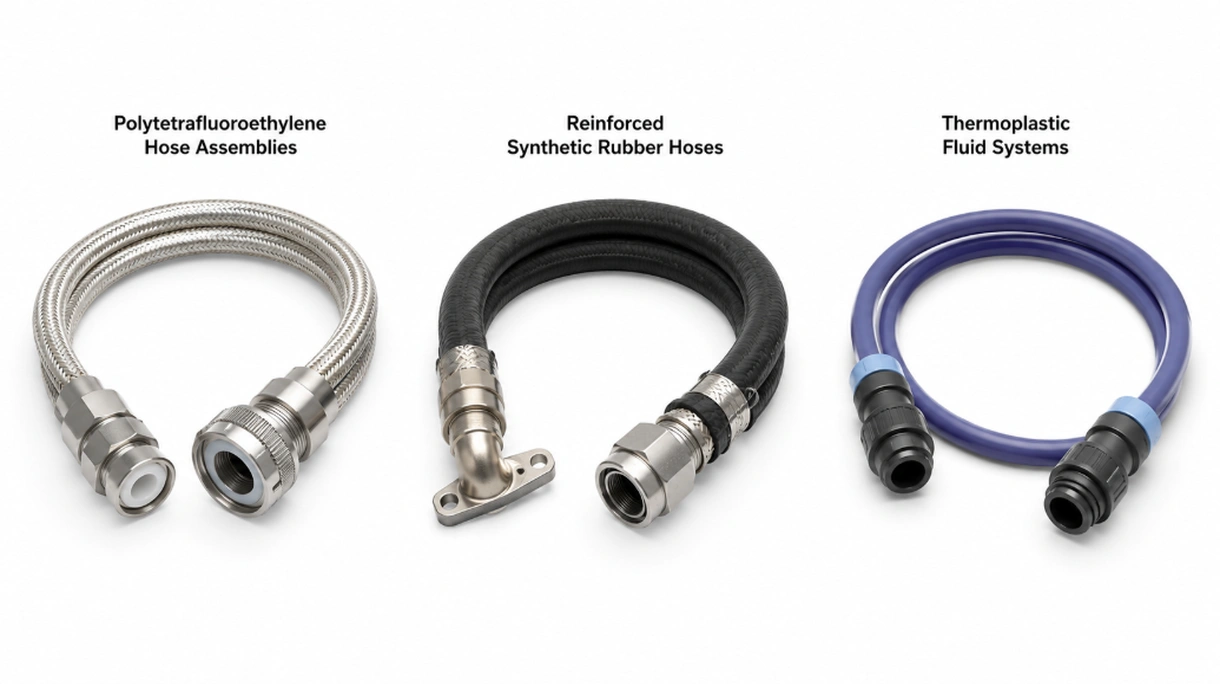
Polytetrafluoroethylene Hose Assemblies
PTFE assemblies provide superior thermal stability compared to standard elastomers, ensuring reliability within high-temperature engine zones and aggressive chemical nacelle environments.
Performance Trade Offs
Advantages include chemical inertness and heat resistance. Limitations involve high cost. The trade-off is superior longevity versus high investment.
Reinforced Synthetic Rubber Hoses
Reinforced rubber options offer better vibration damping than rigid tubing or thermoplastics, making them ideal for landing gear and flight control surface movements.
Operational Utility Profile
Advantages include vibration damping and installation flexibility. Limitations include lower heat thresholds. Trade-offs involve easier handling versus frequent inspections.
Thermoplastic Fluid Systems
Thermoplastic systems offer significant weight reduction compared to traditional rubber or metal lines while maintaining the strict outgassing standards required for cabin environments.
Mass Efficiency Factors
Advantages include significant mass reduction. Limitations include limited high-temperature performance. Trade-offs focus on weight efficiency versus limited operational thermal ranges.
6 expert tips
Prioritize aerospace standard compliant assemblies to ensure long-term durability and safety within high-pressure hydraulic flight control systems.
Source exclusively from manufacturers providing full quality management certification to guarantee material traceability for critical airframe fuel line installations.
Implement predictive maintenance programs using life-limit tracking to replace critical hoses before fatigue causes catastrophic hydraulic system failures.
Specify titanium or stainless steel fittings to prevent galvanic corrosion when connecting hoses to disparate metallic airframe structures.
Verify fire-resistant sleeve ratings for hoses located in designated fire zones to ensure essential fluid flow during emergencies.
Evaluate total cost of ownership by comparing initial procurement price against the operational lifespan and maintenance frequency requirements.
Always verify the technical certification to ensure compliance with local building safety standards and long-term durability.
Innovations and Trends
Integrated health monitoring sensors provide real-time data on hose fatigue and internal pressure to enable proactive maintenance cycles.
Advanced bio-based elastomers reduce environmental impact while maintaining the strict chemical resistance required for modern jet fuel systems.
Lightweight composite braiding techniques offer high-pressure containment with significant mass reduction compared to traditional stainless steel wire reinforcements.
Additive manufacturing for custom hose fittings allows for complex geometries that optimize fluid flow and reduce potential leak points.
*Prices are pre-tax. They exclude delivery charges and customs duties and do not include additional charges for installation or activation options. Prices are indicative only and may vary by country, with changes to the cost of raw materials and exchange rates.
About AeroExpo
AeroExpo is a marketplace that offers B2B players a complete experience, from product sourcing to purchase. AeroExpo is an entity of VirtualExpo Group.
Are you a buyer?
Are you a supplier?