
- Home page
- buying guide
- turboprop aircraft
turboprop aircraft
turboprop aircraft: A technical guide

4 Criteria to choose your turboprop aircraft
Specific Fuel Consumption
Low fuel burn for regional routes, optimizing operational margins while meeting EASA and FAA emissions targets effectively.
Short Field Performance
Critical for regional accessibility, allowing operations on runways under four thousand feet without compromising maximum takeoff weight requirements.
Lifecycle Maintenance Costs
Direct maintenance costs per flight hour must align with power-by-the-hour agreements to ensure long-term profitability and asset value.
Passenger Cabin Versatility
Rapid reconfiguration between high-density and combi layouts ensures maximum utilization across diverse regional market demands and seasonal shifts.
Available technologies and advantages
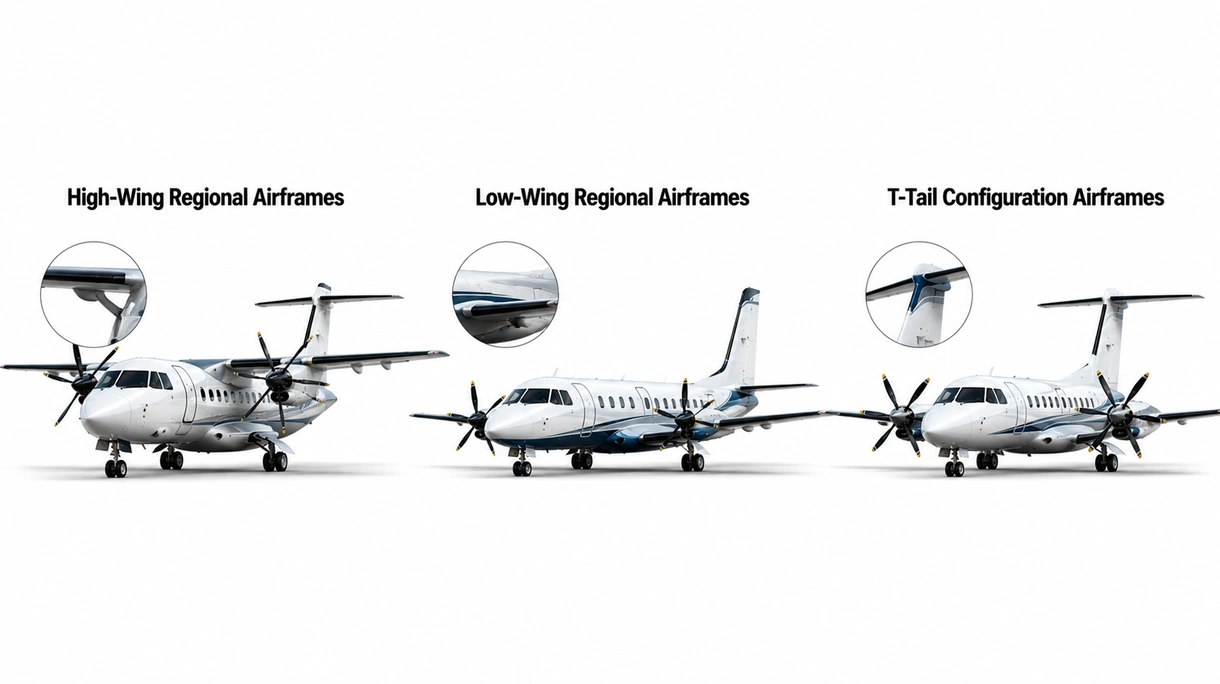
High-Wing Regional Airframes
This configuration optimizes lift for short takeoffs and provides better clearance on unpaved runways. Advantages include stability and accessibility, while drag limits speed compared to low-wing designs.
Advanced Integrated Avionics
Modern digital flight decks enhance situational awareness in challenging terrain compared to analog systems. These tools reduce workload but require high capital investment and specialized software maintenance training.
Composite Propeller Systems
Multi-blade configurations using carbon fiber materials significantly reduce vibration and noise while improving propulsion efficiency. They offer high durability but involve complex repair procedures compared to traditional aluminum alloy blades.
6 expert tips
Prioritize airframes with high EASA and FAA commonality to ensure seamless global remarketing and simplified cross-border certification processes.
Evaluate the total cost of ownership by integrating engine power-by-the-hour contracts to mitigate unforeseen maintenance expenditure risks effectively.
Select configurations with modular interior components to adapt quickly to evolving regional passenger density and cargo capacity requirements.
Conduct thorough due diligence on structural fatigue life limits to ensure long-term durability and compliance with aging aircraft regulations.
Invest in advanced flight data monitoring systems to optimize fuel efficiency and ensure compliance with safety management system mandates.
Always verify the technical certification to ensure compliance with local building safety standards and long-term durability.
Innovations and Trends
This integration aims to reduce carbon emissions and lower fuel consumption for short-haul regional flight profiles.
Implementation of fuel compatibility ensures compliance with tightening environmental regulations while maintaining current engine performance levels.
Technologies enhance safety by reducing pilot cognitive load during critical phases of regional flight and taxiing.
Digital twin technology allows for real-time component analysis and proactive maintenance scheduling to improve dispatch reliability.
*Prices are pre-tax. They exclude delivery charges and customs duties and do not include additional charges for installation or activation options. Prices are indicative only and may vary by country, with changes to the cost of raw materials and exchange rates.
About AeroExpo
AeroExpo is a marketplace that offers B2B players a complete experience, from product sourcing to purchase. AeroExpo is an entity of VirtualExpo Group.
Are you a buyer?
Are you a supplier?