
- Home page
- buying guide
- windsock
windsock
windsock: A technical guide
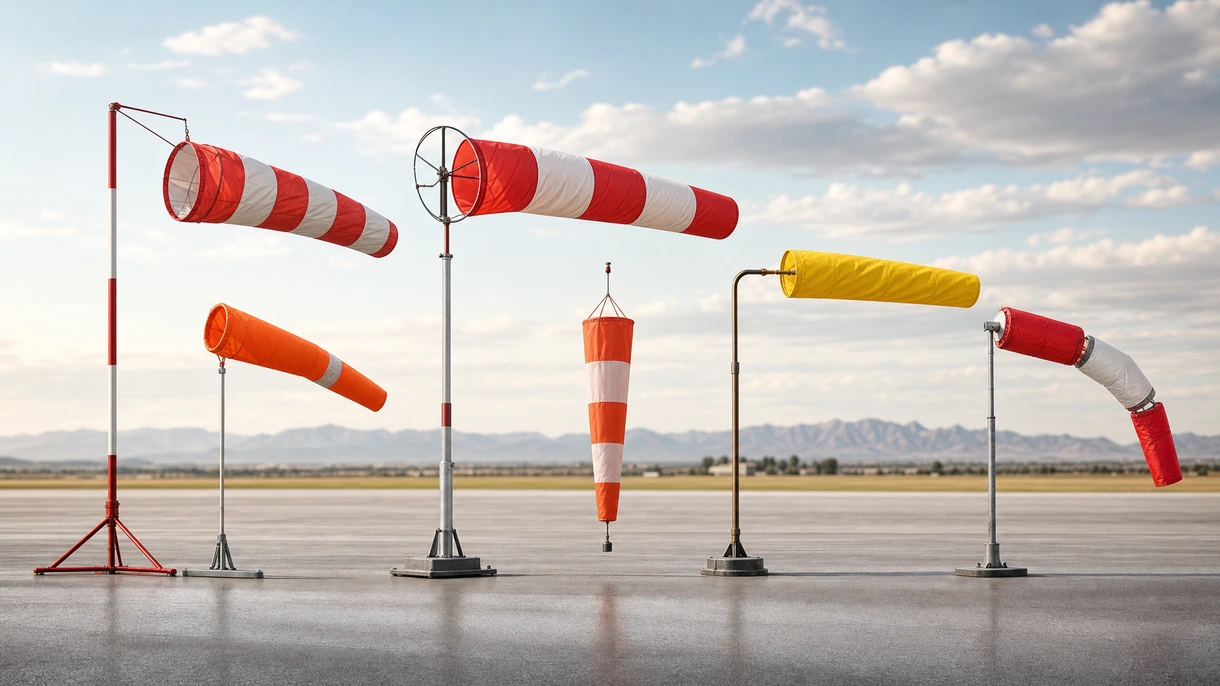
4 Criteria to choose your windsock
FAA and EASA Compliance
Products must meet FAA AC 150/5345-27 and EASA CS-ADR-DSN standards to ensure legal operation and pilot visual accuracy.
UV and Tear Resistance
High-tenacity polyester with polyurethane coating prevents color fading and structural failure under intense solar radiation and high-velocity winds.
Internal Lighting System Reliability
Integrated LED illumination ensures visibility during nighttime operations and low-visibility conditions, maintaining safety according to Annex 14 requirements.
Bearing and Swivel Friction
Low-friction stainless steel pivot mechanisms ensure immediate orientation response to low-speed wind gusts for accurate directional wind indication.
Available technologies and advantages
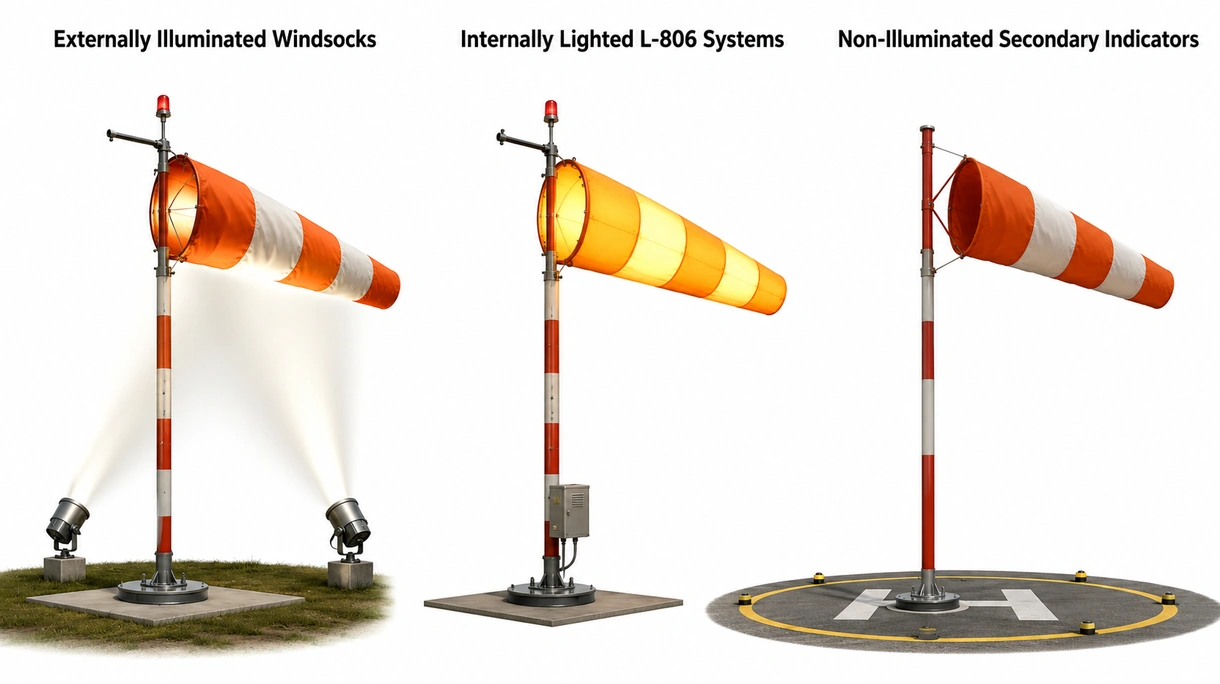
Externally Illuminated Windsocks
External floodlighting systems utilize perimeter lamps to illuminate the fabric, providing clear visual orientation during night flight operations.
Advantages and Limitations
This technology offers easy maintenance access and low initial costs but can cause glare or shadowing during heavy precipitation.
Internally Lighted L-806 Systems
Internal LED arrays provide uniform luminosity through the fabric, enhancing visibility contrast for pilots during critical approach and takeoff phases.
Advantages and Limitations
Internal lighting reduces light pollution and improves clarity in fog yet requires specialized wiring and more complex bulb replacement.
Non-Illuminated Secondary Indicators
Simple fabric cones without electrical components serve as auxiliary indicators for taxiways or helipads where night operations are restricted.
Advantages and Limitations
They provide cost-effective redundancy and simplified installation but lack operational utility for standard night-certified commercial airport environments.
6 expert tips
Prioritize frangible mast designs to minimize structural damage to aircraft during accidental runway or taxiway excursions or impacts.
Select high-visibility international orange or white and orange striped patterns to maximize contrast against varied airfield terrain backgrounds.
Invest in sealed stainless steel bearing assemblies to prevent environmental corrosion and ensure 360-degree rotation in low wind speeds.
Implement standardized replacement schedules based on fabric colorimetric degradation to maintain compliance with mandatory visibility and safety thresholds.
Choose LED-based internal lighting to reduce energy consumption and extend maintenance intervals compared to legacy incandescent airfield lighting.
Validate that the mounting base dimensions align with existing civil engineering infrastructure to avoid costly runway foundation reconstruction.
Always verify the technical certification to ensure compliance with local building safety standards and long-term durability.
Innovations and Trends
Solar-powered LED systems enable rapid deployment in remote airfield locations without the need for extensive underground electrical trenching.
Smart sensing integration allows windsocks to transmit real-time digital wind data directly to airport meteorological observation automated systems.
Synthetic fluorocarbon coatings increase fabric lifespan by resisting jet fuel contamination and environmental pollutants in high-traffic apron areas.
Carbon fiber frangible poles reduce total system weight while meeting strict ICAO safety requirements for collapsible airport infrastructure.
*Prices are pre-tax. They exclude delivery charges and customs duties and do not include additional charges for installation or activation options. Prices are indicative only and may vary by country, with changes to the cost of raw materials and exchange rates.
About AeroExpo
AeroExpo is a marketplace that offers B2B players a complete experience, from product sourcing to purchase. AeroExpo is an entity of VirtualExpo Group.
Are you a buyer?
Are you a supplier?